
This is the history that Vladimir Putin wants us to forget
23 August is Black Ribbon Day for remembering the victims of totalitarianism on the anniversary of the Molotov-Ribbentrop Pact.
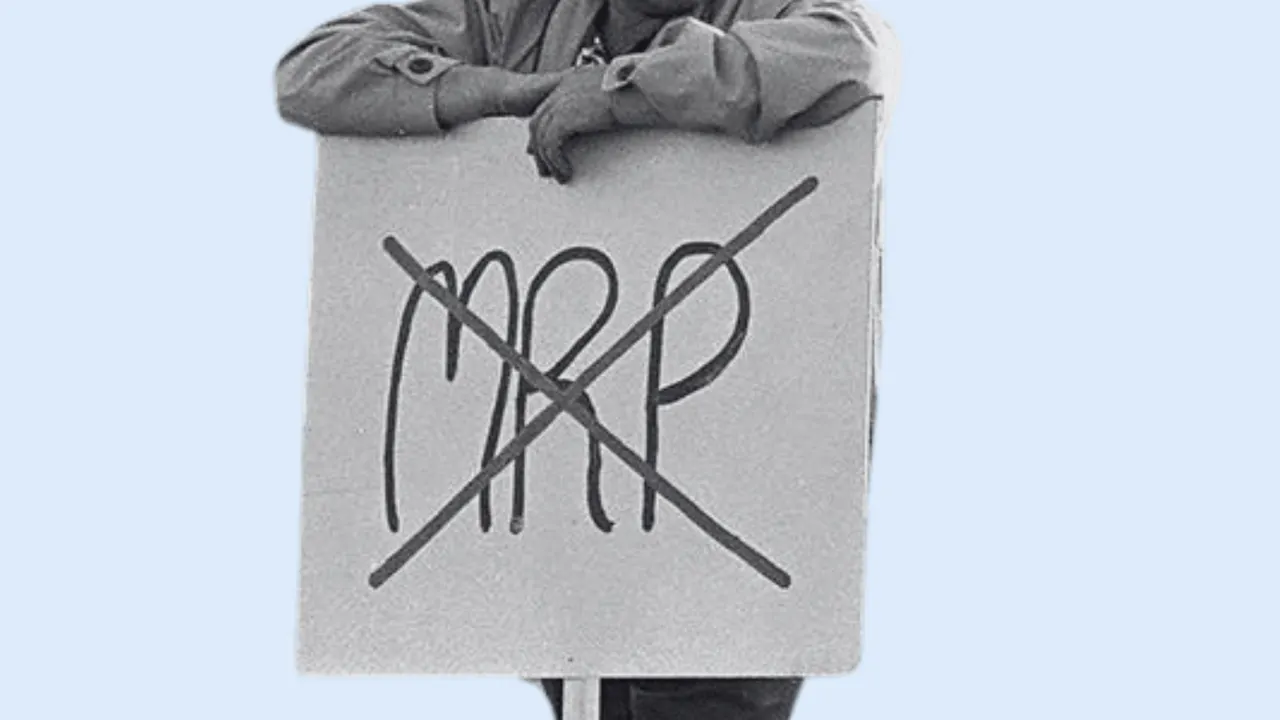
Marcus Kolga is an Estonian-Canadian journalist, founder of DisinfoWatch, and an expert on disinformation, human rights, and transnational repression. This article first appeared in Canada's Globe and Mail on Friday, August 21, 2026, to explain the importance of Black Ribbon Day.
Ever since Vladimir Putin launched his full-scale war against Ukraine, the Kremlin has justified its unprovoked invasion as a “special military operation” to “de-Nazify” a democratic country led by a Jewish President, Volodymyr Zelensky.
Nearly five years into a war that has killed more than 16,000 civilians, wounded tens of thousands more and torn more than 20,000 children from their families, Mr. Putin continues to offer up this false claim.
The Russian President’s “de-Nazification” fraud depends on one of the Kremlin’s most enduring historical lies: a carefully constructed version of the Soviet Union’s relationship with Nazi Germany in which Moscow was only ever an innocent victim of fascism, surrounded by predators determined to destroy it.
The history that Mr. Putin needs us to forget begins on Aug. 23, 1939, when Joseph Stalin signed a treaty with Adolf Hitler that divided Central and Eastern Europe between them.
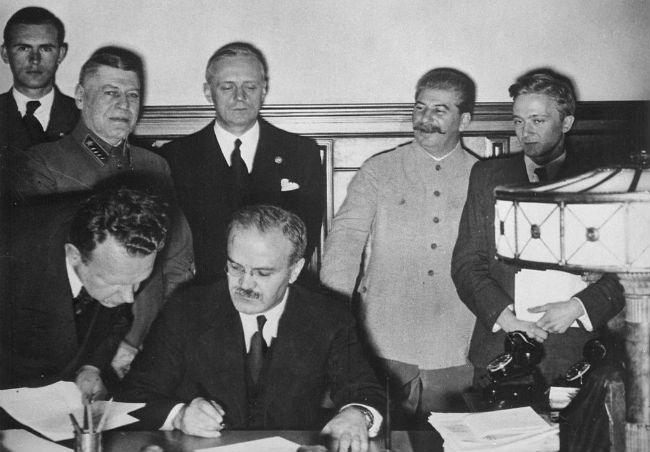
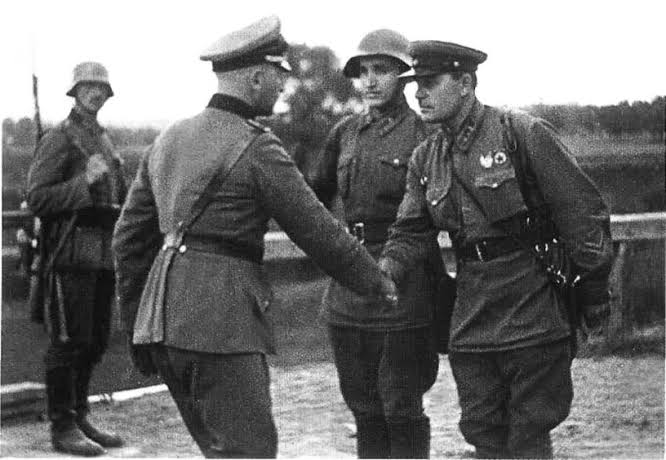
The Molotov-Ribbentrop Pact and its secret protocols cleared the way for Hitler’s invasion of Poland from the west on Sept. 1, and Stalin’s invasion from the east on Sept. 17. Days later, German and Soviet forces met at Brest-Litovsk, marking their joint conquest with a parade through the city’s streets.
The pact’s impact was immediately felt across Europe, and by families living in it – my own included.
The agreement assigned Estonia, the birth country of my parents, to the Soviet Union, and shortly after signing the pact with Hitler’s government, Stalin forced Estonia to accept Soviet military bases. A year later, those forces enforced the Soviet occupation. Moscow installed a puppet government, staged a sham election and, much as Mr. Putin did with Crimea in 2014, forced Estonia’s incorporation into the Soviet Union. Estonia’s democratic leaders were arrested and deported. The same process was repeated in Latvia and Lithuania. And thus was Soviet Russian colonization imposed through repression, deportation, imprisonment, executions and the forced displacement of people from their homeland.
What’s more, independent Estonia had been among the first European nations to grant cultural autonomy to its Jewish, Russian, German and Swedish minorities. That ended in June, 1940. Jewish cultural autonomy was abolished, and during the June, 1941, deportations, thousands of Estonians and roughly 10 per cent of Estonia’s Jewish population were deported to Soviet gulags to perform slave labour. Then came the German Nazi occupation and the Holocaust.
Canada and its allies liberated and restored the freedom of countries such as France, Belgium and the Netherlands. But the Soviet Union was able to continue its repression and colonization of Estonia that began in 1940 for decades.
The Kremlin dealt with these inconvenient facts by inventing yet another lie – that the hundreds of thousands of Central and Eastern Europeans who fled Soviet occupation were not victims of repression, but fascists, Nazi collaborators and enemies of humanity.
The Kremlin is recycling this same lie against Ukrainians today; Ukraine’s resistance to Russian domination is being recast as “Nazism.” When Russian forces murdered civilians in Bucha in 2022, the Kremlin responded with denial, fabrication and smears. Occupation turns into “liberation.” Victims are transformed into “fascists.” Those who remember what happened are labelled “extremists.”
This historical manipulation is also deployed by Moscow to smear, isolate and intimidate diaspora communities abroad. In Canada, Soviet propaganda reinforced existing prejudices against Eastern European immigrants, portraying them as extremists. Today, Kremlin-aligned voices – including domestic Canadian ones – continue to amplify these narratives, in efforts to delegitimize Baltic, Ukrainian and Eastern European Canadians who dare to challenge Moscow.
My parents fled to Canada, where I was born, and I have spent my life defending Estonia’s freedom and its right to tell the truth about its history.
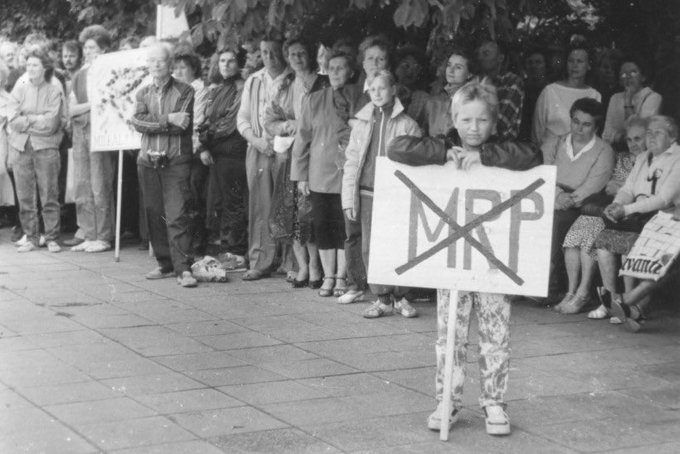
For that, the Soviet regime and its modern defenders have branded people like me and other Estonians in the same way the Kremlin brands Ukrainians today: Opposition to Moscow became evidence of fascism, and the insistence that Estonia had been occupied has been dismissed as “Russophobia.”
This is why Aug. 23, Black Ribbon Day, matters. It defends historical truth against an autocratic regime that manipulates history to justify its criminal aggression today.
Resisting Russian information warfare requires more than debunking individual lies; we have to dismantle the historical myths that support them. After all, there is no contradiction in confronting Nazi crimes while also acknowledging Soviet ones.
History does not require us to choose which dictatorship’s victims deserve to be remembered. For Canadians of Estonian, Ukrainian, Polish, Latvian, Lithuanian and Central and Eastern European heritage, this history is part of our families’ lived experience, and why they came to Canada. Moscow is still trying to erase that history – and we must not allow that.


