"Enough of this Soviet shit": How students created a ‘NATO Brigade’ in occupied Estonia
Satterfield was an imagined NATO base and a pre-internet meme. Some of its inhabitants went on to play a major role with the real NATO decades later.
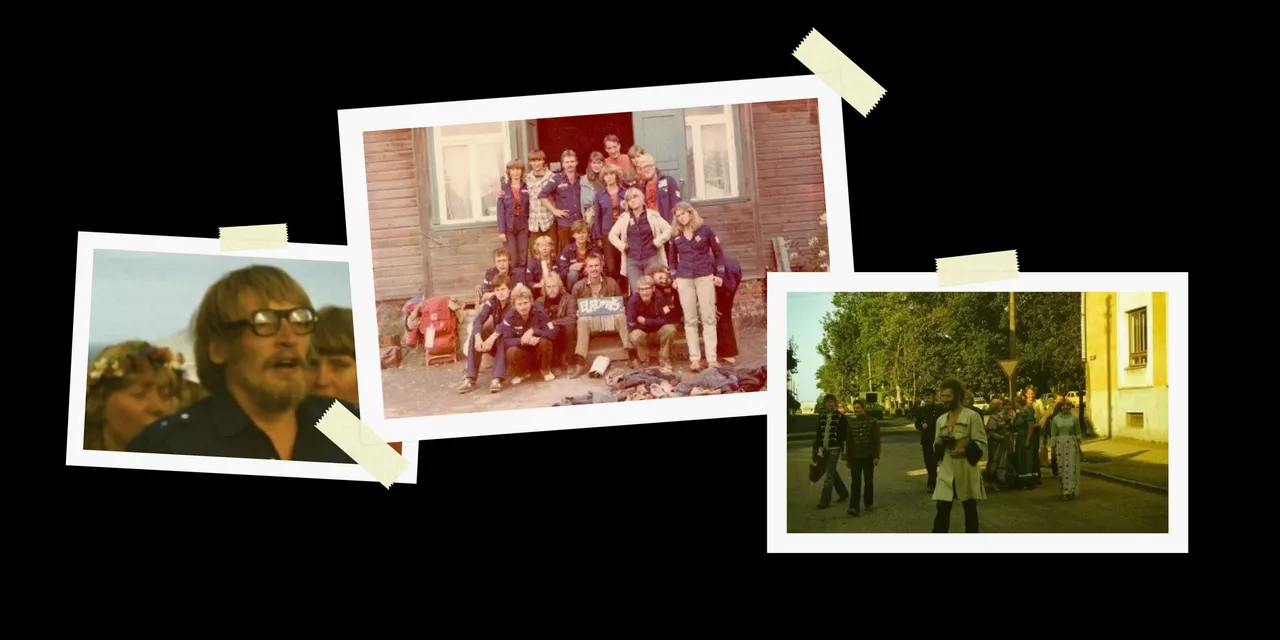
“We’ve been waiting for you since 1949,” explained Eerik N Kross, former head of Estonian Intelligence, to the first foreign NATO troops to arrive in Estonia.
Despite the often repeated line that NATO expanded to Russia's border only then when the Baltics were finally allowed to join, NATO was founded with land and sea borders with Russia. In addition, the highest representatives of the Baltic countries in exile made it clear even back in 1949 that they belonged too, as is their sovereign right to join a defence alliance as independent Republics under international law.
Kross, and several other key people involved in the delayed process to integrate with NATO, also have their own bizarre story of already being part of NATO (of sorts), as members of a resistance group light-heartedly styled as a NATO brigade.
Rewind.
In the early 1980s, a third generation of occupied Estonians entered university. Their parents had been brutalised by Soviet rule, but kept the spirit of independence alive and their children had new energy, new confidence, and new ideas to overthrow the empire.
The students began to organise. Anti-occupation protests spread in the '80s like never before.
It started through semi-official networks. One example was EÜE, which were construction summer camps for students organised by the youth wing of the communist party.
Each group was sent to the countryside with an official task, such as building a barn, in order to learn “Soviet work ethics”. But, while there unsupervised, the students often bonded instead over how to defeat the occupation and found creative ways to relentlessly mock their occupiers. The camps turned into cells of resistance.
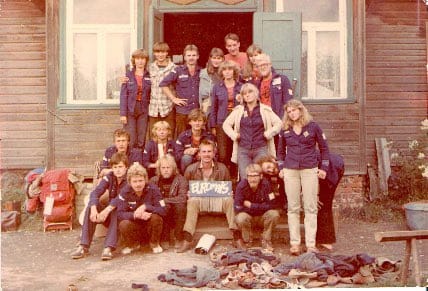
In 1981, one such camp called itself Persostrat. The name was typically soviet as an abbreviation of a clunky, pompous phrase. (Also, it sounded like “ass sphere” in Estonian.) The group spent the summer writing their own parody soviet songs.
The next summer, in 1982, a new camp formed out of most of the same members and was sent down to south Estonia. They called themselves Euromais with a plan to parody soviet corn growing campaigns.
After arriving, they came up with a better idea.
“Enough of this Soviet shit,” said their camp leader, Mati Laur. They decided instead to declare their camp as a NATO base. Specifically, a British NATO base, because the British had a key role in supporting Estonia during its war of independence and they knew that reference would annoy the occupiers even more.
They put up signs in English and organised a strict schedule that included afternoon tea and picnics. They imitated and exaggerated British culture, manners, and fashion while ridiculing their unsophisticated occupiers. They wrote and enthusiastically sung their own anthem about how NATO would help free Estonia. It was sung to the tune of Yankee Doddle, an iconic tune among Estonian youth as it was the opening to Voice of America’s Estonian broadcasts, which usually got through before the soviet jammers could interrupt it.
Incredibly, this “NATO base” was a stone's throw from an actual soviet base, which we now know had nuclear warheads.
Yet, to the students, the location was Satterfield, an English-sounding name invented for their imagined secure utopia.
Satterfield became a pre-internet kind of meme, enduring for years to come through networks across Estonia. An invitation to Satterfield was code for resistance organising.
Members of this “British NATO base” later formed part of the core of the student resistance to soviet occupation. They had a leading role in campaigning to anul the Nazi-Soviet pact and helped get the Singing Revolution started.
A decade after establishing their mock base, they achieved their goal. Estonia and its Baltic neighbours were free and the Soviet Union was no more.
The members of that original group are now well respected men and women in free Estonia, including Kross himself, and also Sulev Kannike who would become Estonian Ambassador to NATO when Estonia joined the alliance in 2004.
Some of these same people are now part of NAFO, a group with a familiar sense of humour.
The spirit of Satterfield lives on.


