
Europe should look to Narva for inspiration, not pity, in the face of Russian threats
Far from being the most vulnerable, the Baltic countries have the most expertise to share on how all Europeans can raise their preparedness and civic resilience, while standing firm on support for Ukraine.
There’s increased chatter about how Russia may be planning potential attacks on NATO allies, further fuelled yesterday by a Danish intelligence report.
That report is broadly in line with Baltic intelligence assessments and threat assessment level has not changed here.
For many commentators, and especially OSINT-styled accounts on X, the Baltics are thought to be most at risk.
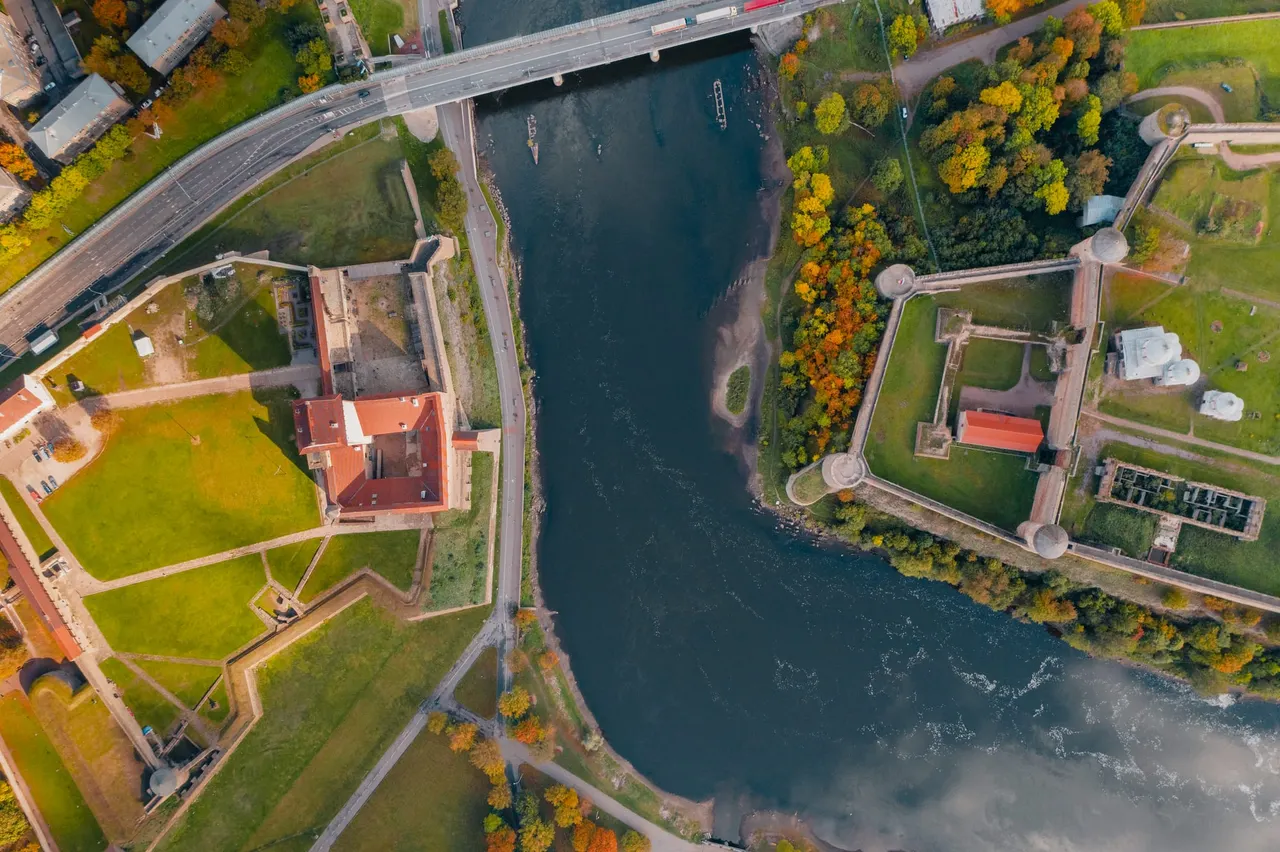
The Institute for the Study of War (ISW) added to that perception by recently publishing a detailed assessment of what a Russian incursion into the Estonian town of Narva might look like.
 Brendan Cole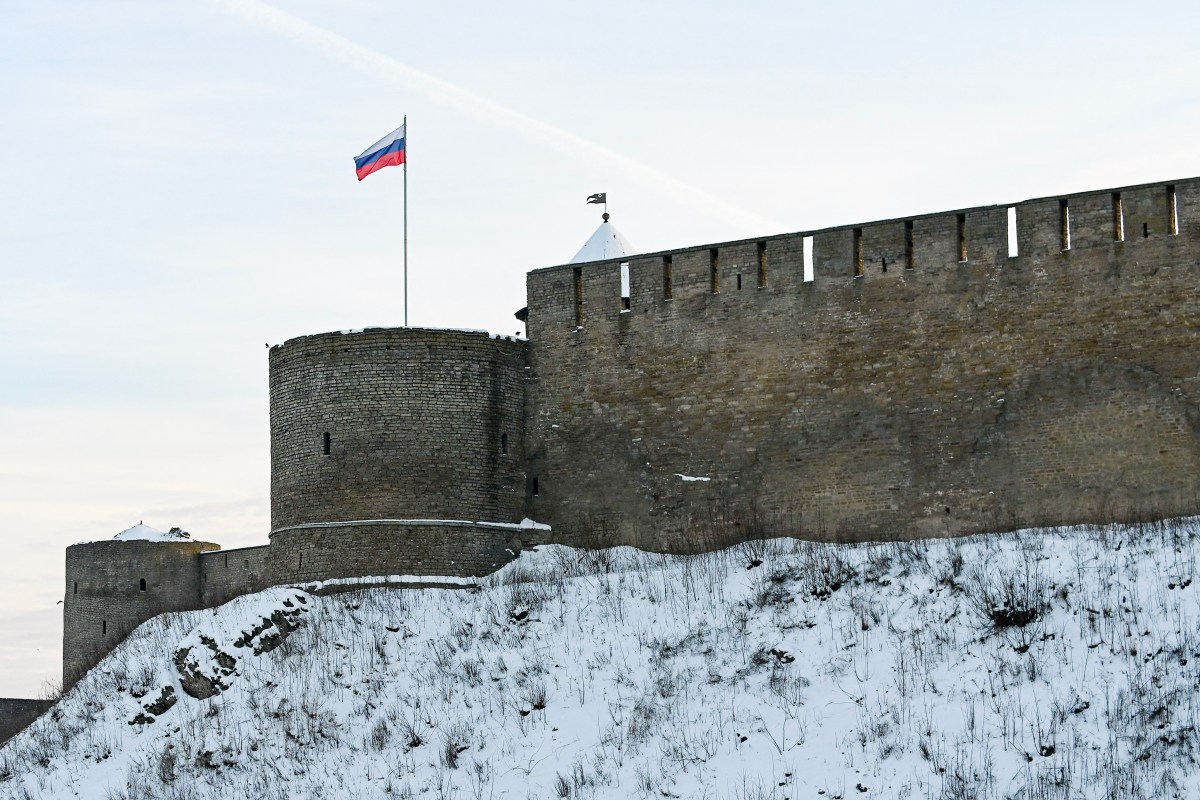
This has further fuelled a lot of media coverage and online speculation that Narva (or, just as often, the Lithuanian-Polish ‘Suwalki gap’) is where either World War Three will begin or where the NATO alliance will end.
None of this fits with the intelligence, nor with a more considered look at what fuelled those perceptions and what is actually unfolding across Europe.
That’s why the Baltics are pushing back.
"I am pleased to confirm that there is absolutely no reason to believe that Russia is imminently going to launch a military attack on NATO, Estonia or the Baltic states,” Jonaton Vsevio, Secretary General at the Estonian Foreign Ministry, told ERR.
“We can see beyond our borders. It is somewhat surprising to find ourselves, as representatives of Estonia, in a situation where, after years of explaining to our Western colleagues that Russia poses a strategic threat — and I assure you, it remains a strategic threat because it wants to fundamentally change the way Europe is organized — we now have to tell them: listen, friends, calm down, keep a cool head and breathe normally.”
 Andres Kuusk
The Baltic countries are still consistent in their decades-long warning that Russia is a threat to all of Europe, and to our entire rules-based world of sovereign nations. The purpose of Russia now attempting to expand attacks or the expectation of them across Europe is primarily part of attempts to reduce support for Ukraine.
The frontline could be anywhere unprepared for that reality, which is not Narva, where residents actually have the most expertise for how all Europeans can increase their preparedness and resilience.
Narva is more prepared than most
After those initial briefings, wider reporting made it clear that the CIA Director wasn’t specifically discussing the Baltics. Similarly, French political leaders have been very clear that their sobering briefing was that no one is safe from Russian terrorism.
Meanwhile, the ISW said its assessment about Narva was a thought exercise based on a highly unlikely scenario, a nuance not always reflected in subsequent reporting and discussions of it.
The US-based authors do not seem to have too detailed local knowledge, it should be pointed out. It was based on a number of flawed assumptions about local dynamics, which hugely overstate Russian capabilities, including inside the town of Narva itself, and hugely understate Estonian capabilities in their own country.
The authors imagined how Estonians could be taken by surprise from a Russian attack before then attempting to rush in forces to recapture the town, while confused by Russia’s informational warfare presenting the scenario as local separatism.
In reality, the Estonians have had a higher level of preparedness than the authors assume for such a scenario, even prior to Russia’s occupation of Crimea in 2014.
That Estonian preparedness includes the residents of Narva, many of whom have joined the Estonian Defence League in even higher numbers over recent years so they are trained and ready to help deter any foreign attack, quite unlike the stereotype of local residents as background actors in Russian narratives.
Like Finland and its Baltic neighbours, Estonia takes a whole-of-society approach to defence, which includes being home to around 200,000 people with military training, one of the largest forces in Europe. Not per capita, but total. From a country with 1.3 million people.
And civic resilience spreads much wider across society, which includes bringing in more than a hundred different organisations into crisis exercises to get them all working together. It’s also about investing in media literacy and spreading awareness about how Russian assets are groomed and exploited.
This is why in Narva, both the town and its information space are increasingly difficult for Russian active measures. The Estonians are consistently able to identify and disrupt threats before damage can be done, and are not shy about deporting or convicting those planning trouble.
Intelligence assessments peering beyond the border have also proved to be consistently reliable, both in Russia’s regional force posturing as well as more broadly being able to accurately warn about planned Russian aggression elsewhere, such in 2008 for Georgia and in 2021 about the impending full scale threat to Ukraine.
The threat to Europe today
Meanwhile, it is clear that Russia’s covert activities across Europe have increasingly switched from reconnaissance to sabotage.
The latest episode of The Rest is Classified is worth a listen for a more comprehensive overview - and why this is not just an issue for Eastern Europe.
The attempted drone attack at Leipzig airport last month, officially attributed to Russia, is a clear example of that and would have been even more shocking were it not for the fact that the detonation failed. In that case, the suspect entered the country with known prior criminal convictions and links to Russia’s GRU military intelligence.
Yesterday, the Danish Defence Ministry published its intelligence service report that Russia may intensify its “hybrid attacks” against the West and NATO in the coming months.
As journalist Michael Weiss points out, Russia would continue doing what it’s already doing in terms of cyber attacks and sabotage, only more so. A military attack on a NATO nation is deemed to be a low but growing risk, which it describes primarily in the form of a strike on infrastructure, possibly in the form of a false flag attack.
I'd encourage everyone to read the Danish military intelligence assessment in full, and not rely on excitable social media upsums.
— Michael Weiss (@michaeldweiss) September 24, 2026
Here is the top line: "The Danish Defence Intelligence Service (DDIS) assesses that Russia will intensify its hybrid war by carrying out more… pic.twitter.com/cbKFUDEB5q
Crucially, this would only be remotely likely if Russia believed there wouldn’t be an adequate response.
A report in El Mundo yesterday claimed the CIA had given a more dramatic threat assessment to European governments of Russian drone strikes on Spain, France, and Italy. French President Macron and the Italian Defence Minister later in the day said that wasn’t true, but that more Leipzig-style attacks are plausible. The El Mundo scenario would have very likely united Europeans to deliver a strong military response, hence why it may have been more useful to Russia as an imagined threat, confusing the overall threat assessment published by the Danes.
Estonia’s Ministry of Defence gave a similar assessment to the Danes yesterday, adding that Estonia’s threat assessment remains unchanged as the main threats have been observed across Europe, including in Estonia, for several years and Estonian security authorities have repeatedly succeeded in identifying those responsible and also preventing them.
“Russia’s main effort and resources remain heavily focused on its war of aggression against Ukraine,” said Estonian Defence Minister Martin Herem. “Accordingly, supporting Ukraine must remain the primary focus of both our own efforts and those of our Allies.”
Defence Minister Martin Herem on the Danish Defence Intelligence Service’s public threat assessment:
— MoD Estonia (@MoD_Estonia) September 24, 2026
“The message of Denmark’s public intelligence assessment is, in substance, no different from what Estonian authorities have said in recent months. It is essentially a… pic.twitter.com/yssvZhvRUQ
Stop asking “will he or won’t he?”
When assessing Russian threats, the real question isn’t what one person would decide to do to us, as is often debated online. It’s what Europe would allow adversaries to even consider possible.
The purpose of any Russian attack on NATO and the EU, as well as the perceived threat of any attack, is primarily to undermine support for Ukraine. That assessment from the Baltics is very clear.
And so Russia’s willingness to execute those threats and in what form is almost entirely based on Russia’s assessment of whether this would increase or decrease international support for Ukraine, both in terms of political will and actual resource allocation.
That calculation is tricky and ever evolving, hence it is not predetermined, regardless of what any experts will insist.
The Russians already got their calculations very wrong for their planned three day war in Ukraine, drastically underestimating Ukrainian resilience and the international response.
This is the one area in which we should be helping Russia. We should be helping them calculate that they cannot bear the costs of aggression. Not in Ukraine, and not in its escalations anywhere else. Europe must be clear that it is standing firm because it understands that the cost for Europe will always escalate if we ever allow aggression to be rewarded.
So Russia should not underestimate European resilience now either.
While remaining firm on support for Ukraine and sanctions for Russia, or escalating them accordingly, all of Europe can learn from the Baltics, and places like Narva in particular.
That means not simply waiting to play whack-a-mole in response to every new incident, whether that’s a cyber attack, sabotage, or just new propaganda claims. It’s about raising preparedness and civic resilience to deny possibilities to Russia.
It means better training and education across society to recognise the threats we face from adversaries and handle any and all potential crises. It means denying our adversaries the possibility to broadcast propaganda. It means firmer and more transparent action on convicting and deporting those who would carry out attacks, and preferably not giving them the possibility to enter in the first place, including more broadly with visa bans for visitors from aggression nations.
After Russia’s full scale invasion of Ukraine, many said that we should have all listened to the Baltics. That remains true.


