
It looks like you're trying to justify the Nazi-Soviet Pact
In the history of bad ideas, the Nazi-Soviet Pact may be the very worst of them all. Here's an idiot's guide for those who still need it.
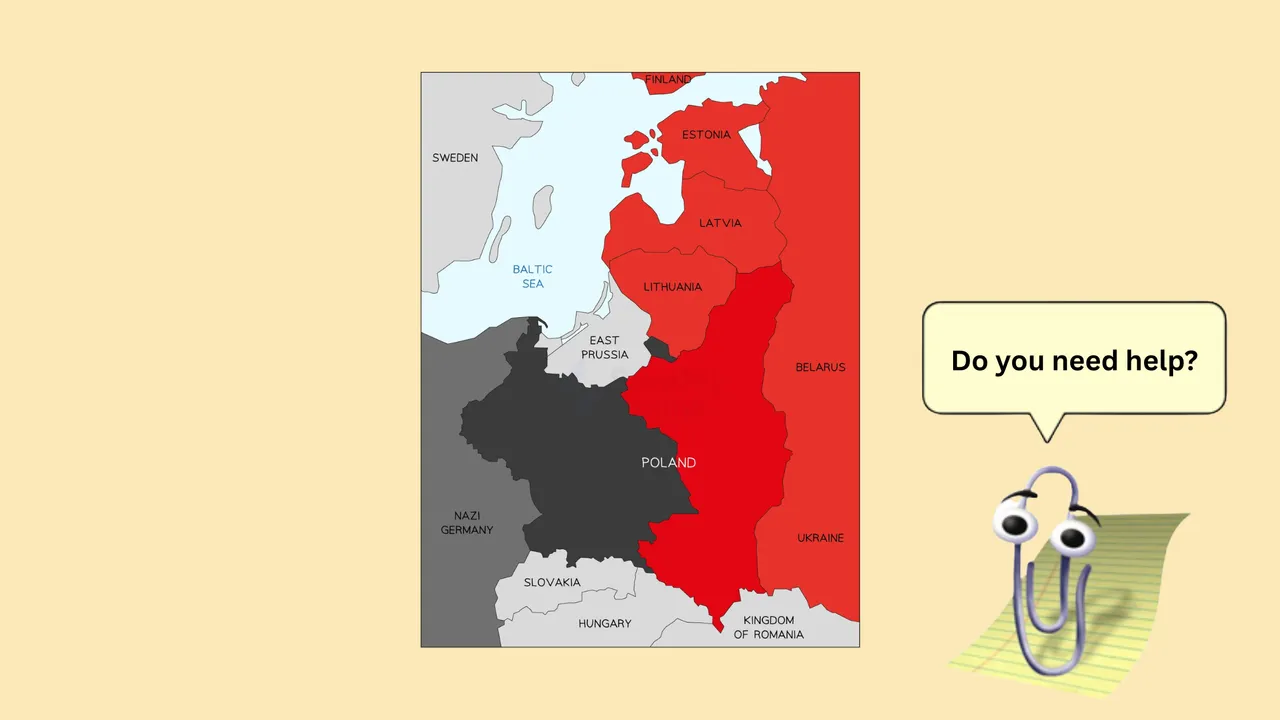
On 23 August 1939, the Soviet Union and Nazi Germany were somehow able to put aside their vast ideological differences as totalitarian powers and sign an agreement to carve up other peoples' countries.
Also known as the Hitler-Stalin or Molotov-Ribbentrop Pact, it gave the green light to the aggression that ignited the Second World War as the deadliest conflict in human history, starting with their mutual invasion of Poland the following month.
This delivered a final fatal blow to the League of Nations and plunged the world back into an age of empires.
It also suggests that perhaps the 18th century seating arrangements of the French National Assembly - responsible for our concept of left and right ring politics - probably aren't always the most useful way to understand the world.
Because once you go far enough left or right, you can end up in the same place. Over and over again.
And still today, that's a place where people are willing to justify the Nazi-Soviet Pact, using some quite incredible mental gymnastics.
We've seen it all here at Bad Baltic HQ so we put together this guide on how the best of them do it.
Have you even said 'thank you' though?
First though, let's all acknowledge the reason any of us can even talk about the Nazi-Soviet Pact today (including those who justify it).
It is not thanks to Stalin, not thanks to Molotov, and not thanks to anyone else involved in agreeing their pact. They never wanted you to talk about it again.
Instead, it is thanks to journalists, historians, and activists who risked Soviet persecution. And, most notably, it is thanks to the people of the occupied Baltic countries.
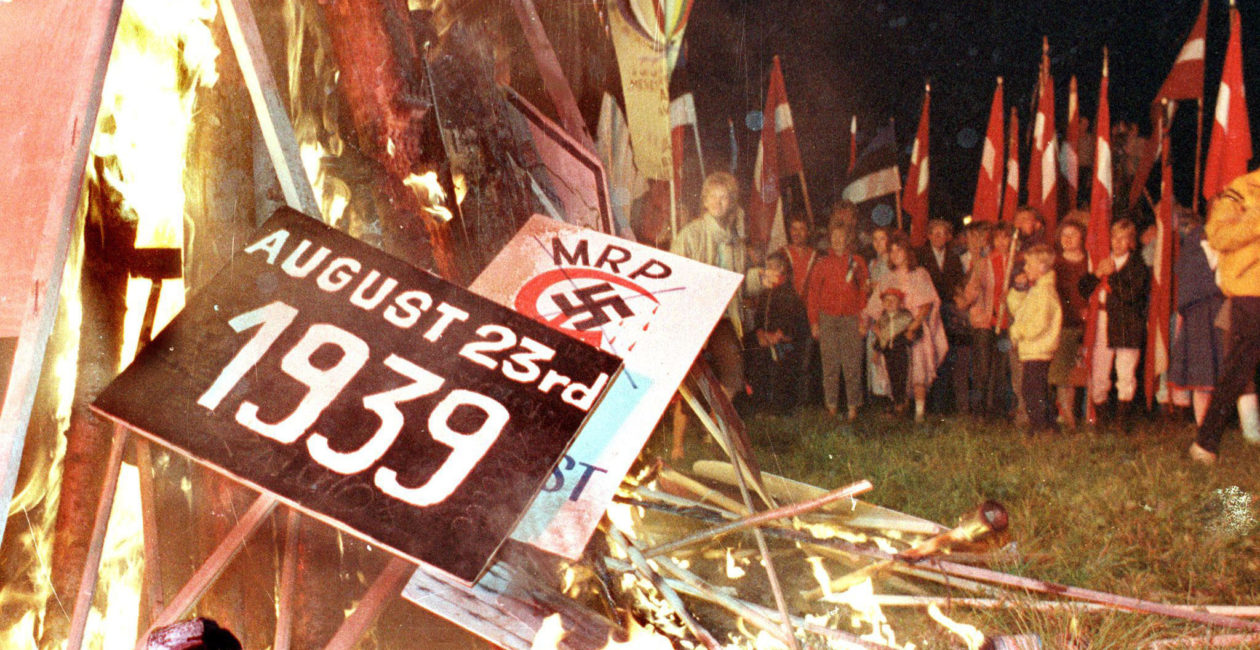
After the Second World War, neither Stalin nor Molotov wanted any credit for some reason. They always denied to their deaths that there was any protocol in it to divide Europe.
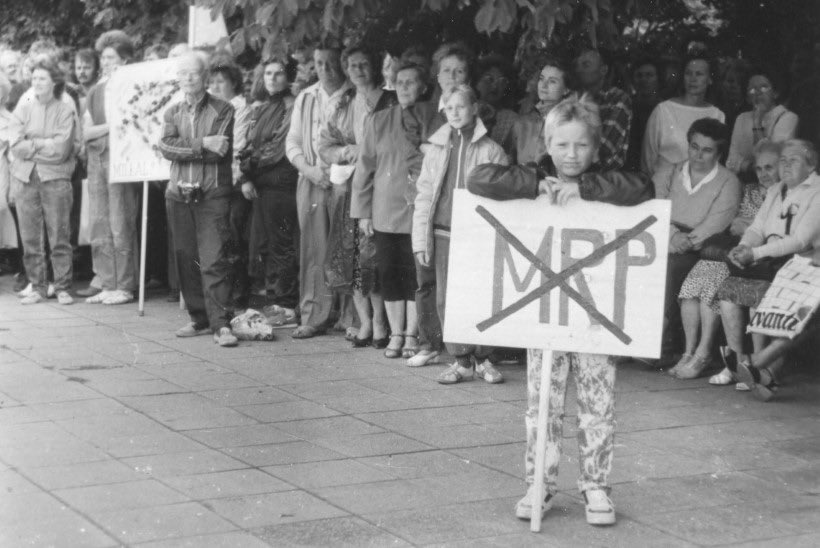
But ordinary people across Estonia, Latvia and Lithuania ensured MRP (the Molotov-Ribbentrop Pact) would never be forgotten.
The full details of the pact were first discovered in the archives of the German Foreign Ministry after it abruptly came under new management in 1945. Fortunately, the British and Americans got there first.
In the aftermath of the Second World War, journalists were able to begin unravelling the rise and fall of the Nazi regime and the horrors it inflicted with the full Pact first published in 1948.
The Soviets immediately began to obfuscate, lying that the Pact was a Western forgery and that there was no protocol to divide Europe into spheres of influence.
The Soviet Union then spent half a century brutally suppressing discussion of the Nazi-Soviet Pact wherever it could, placing those who discussed it under surveillance and charging them with adjacent crimes that led to their imprisonment, exile, or even psychiatric detention.
In 1979, dissidents from across the Baltic countries published the Baltic Appeal, an open letter on the pact's 40th anniversary, calling for its disclosure and annulment, and therefore the end of occupation.
All 45 signatories were punished, but the movement continued.
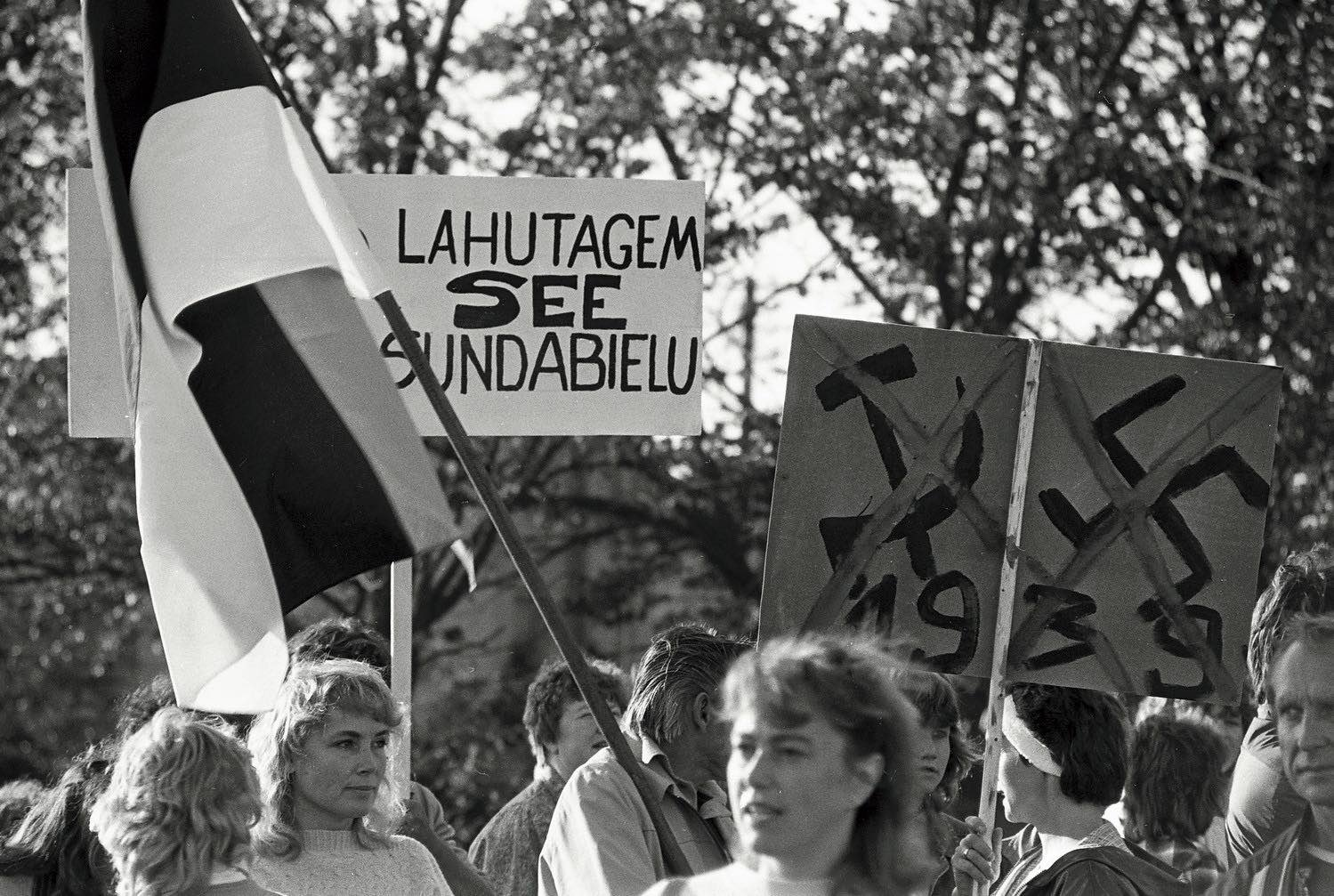
Anti-MRP sentiment gained traction throughout the 1980s, in both the Baltic countries and among Baltic exile communities in the West.
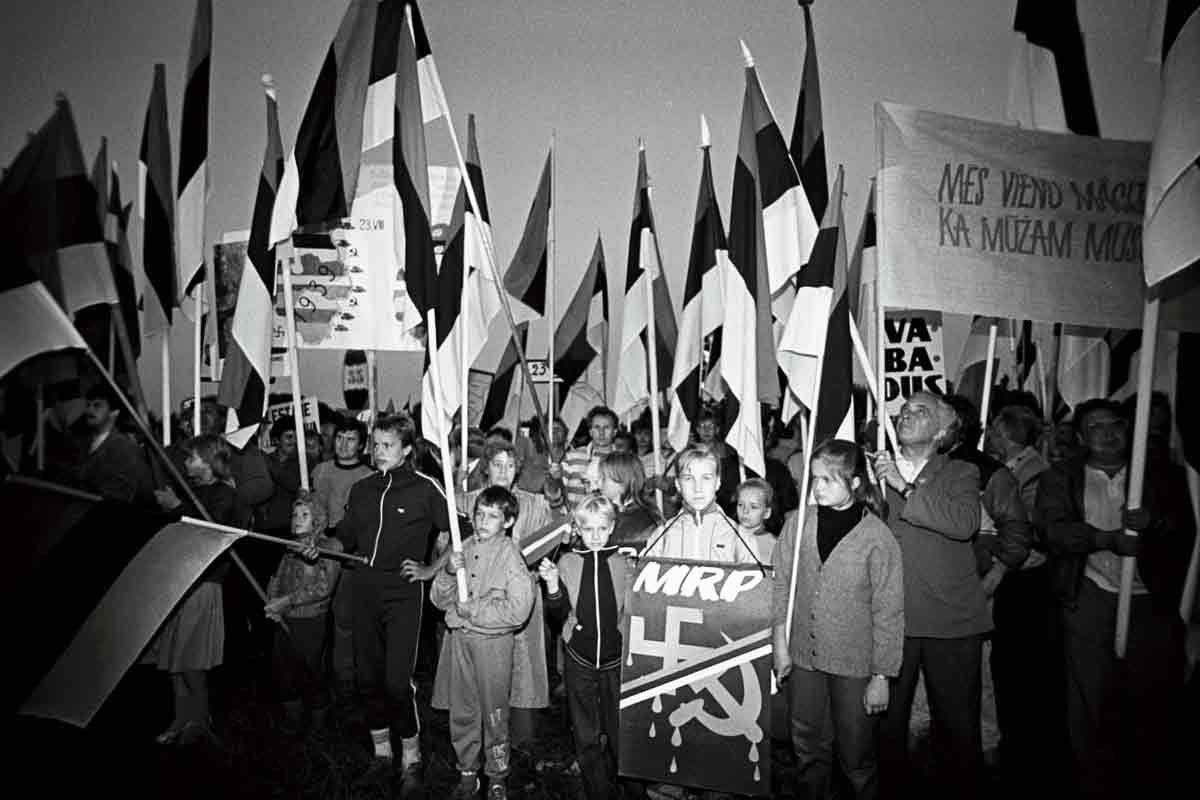
In 1987, the Singing Revolution erupted across the Baltic countries, enabling the anniversary that year to become the first big anti-MRP (or anti-anything) protest in the Soviet Union and Soviet-occupied Baltic countries.
Authorities were stunned by an estimated 7,000 people turning up in Tallinn's Hirve park to demand, louder than ever before, that the Nazi-Soviet Pact must be fully disclosed and annulled.
The dam had burst.
And momentum was building to the 50th anniversary of the Pact in which the world's worst idea would be marked by possibly the most spectacular protest in human history, gathering literally orders of magnitude more people.
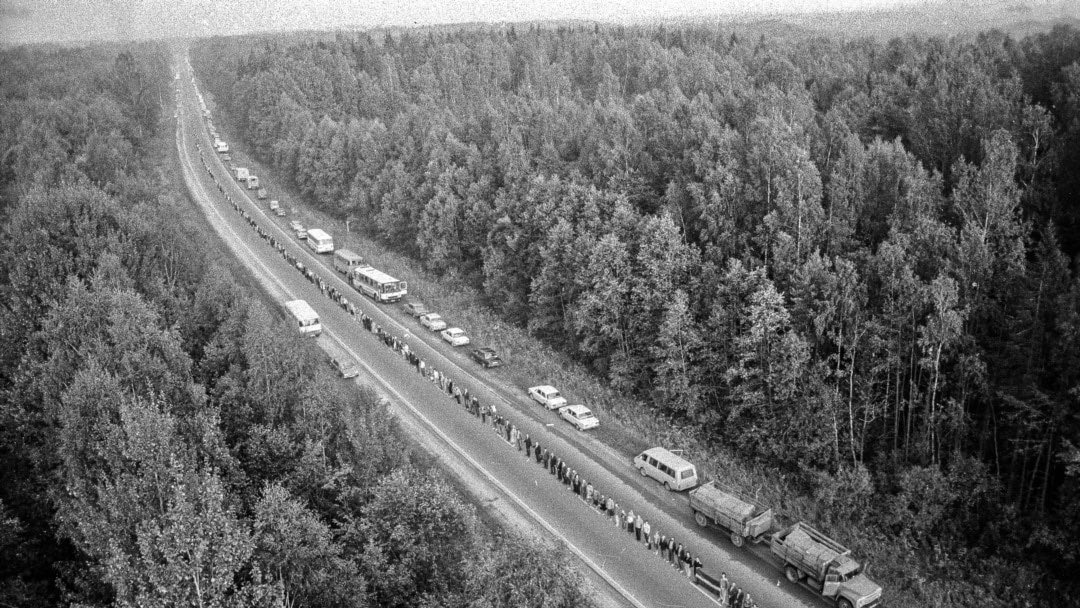
With no social media and no mobile phones, and with a brutal regime determined to stop them, two million people carrying anti-MRP signs formed the world’s longest perfectly unbroken human chain of nearly 700km across the three Baltic countries in 1989.
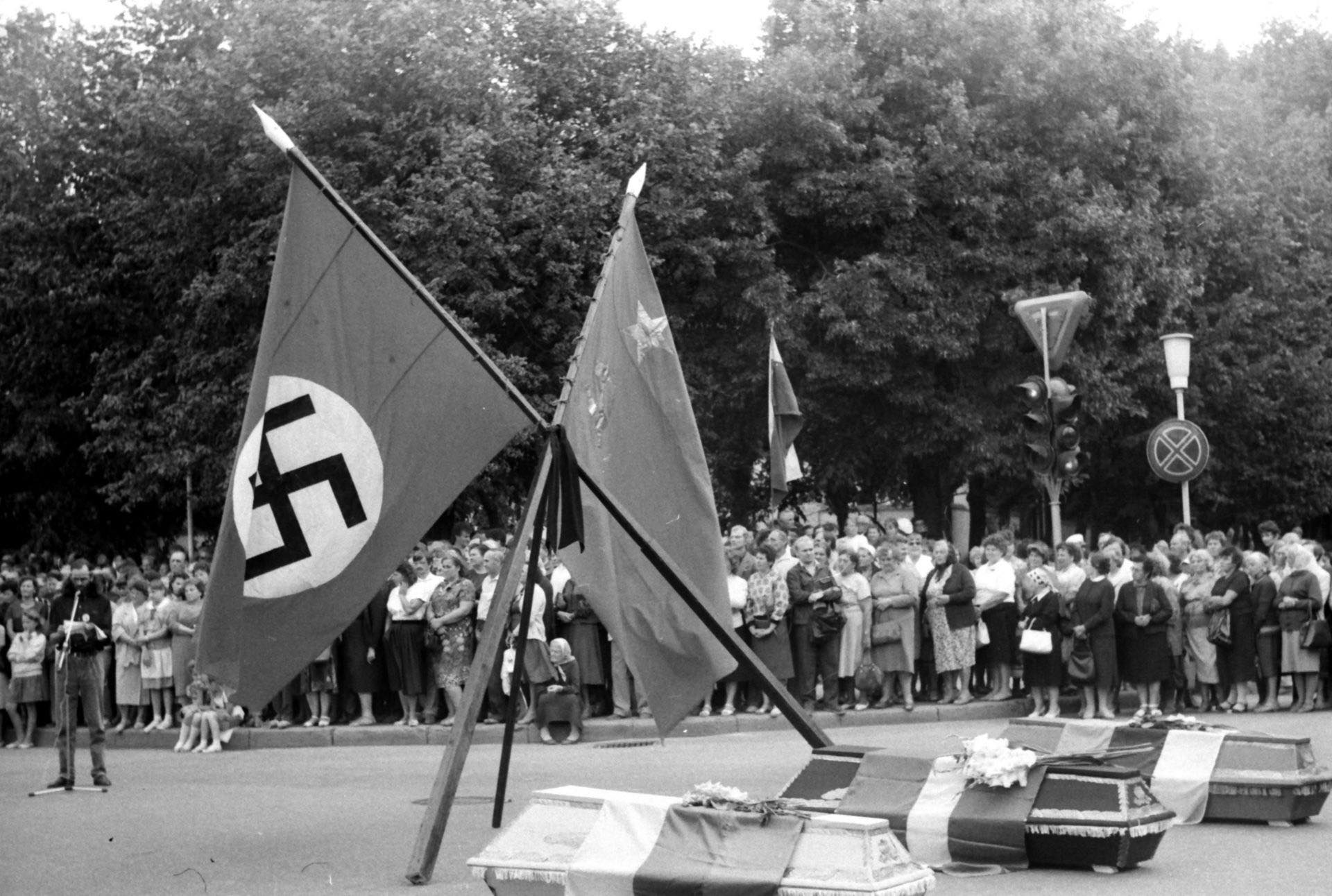
"Today, on the 50th anniversary of this deal, we remind all the nations of the world that under international law treaties of this kind are criminal and unlawful from the very moment of signing," declared the organisers in a statement about the Baltic Way, calling on Europe to "divest itself of the last colonies of the Hitler-Stalin era".
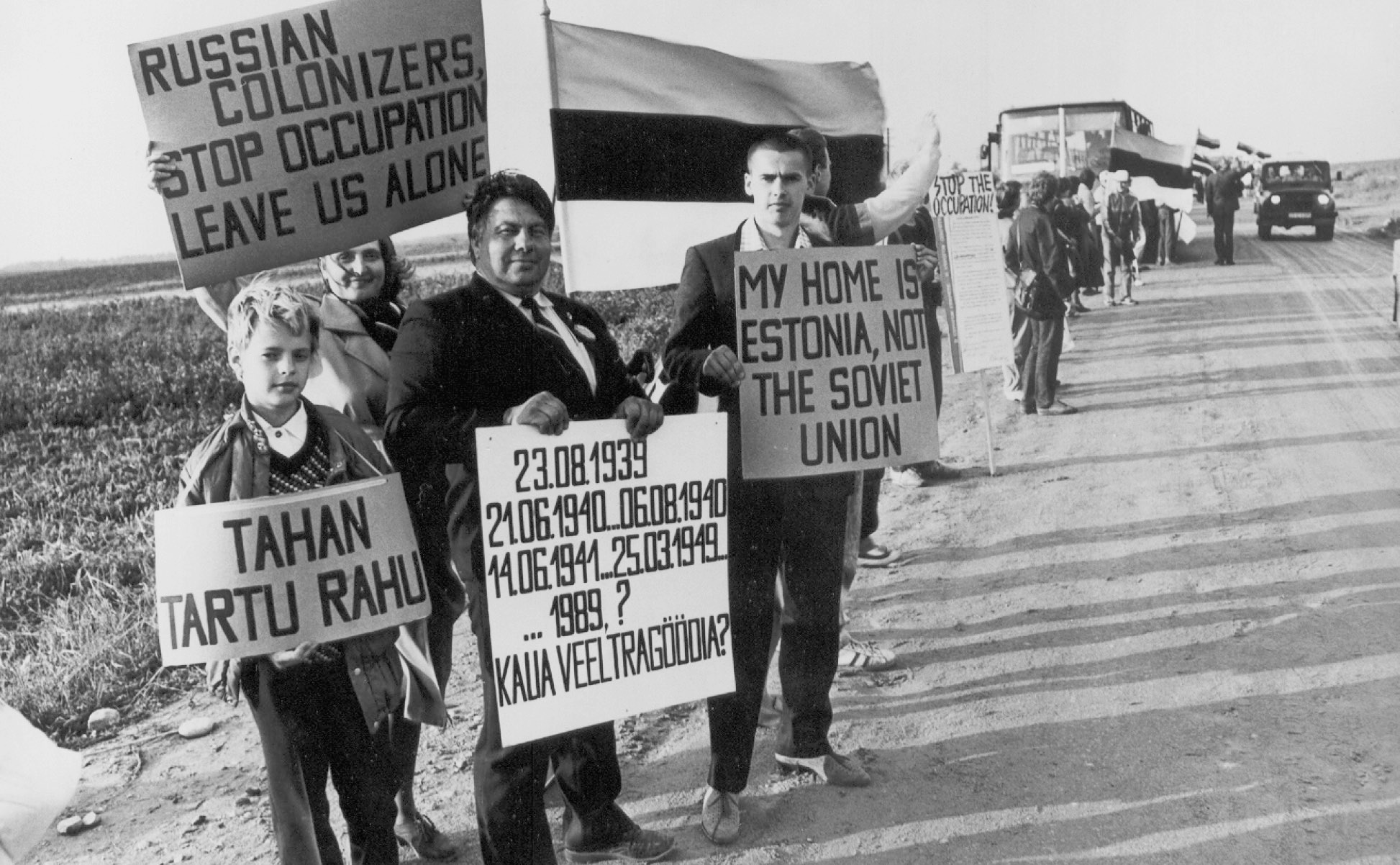
It was only under this overwhelming, sustained pressure that Moscow was forced into discussing the Nazi-Soviet Pact.
In December of 1989, the Peoples Deputies of the USSR finally acknowledged and condemned the full pact, describing it as criminal collusion that violated the rights of nations.
They added, without logic, that this still didn't affect the legal status of the Baltic countries within the Soviet Union and they put the blame for the Pact onto individuals, primarily Stalin, hoping to avoid culpability for the Soviet Union as a whole system.
It still couldn't stop the Baltic countries from formally annulling the Nazi-Soviet Pact themselves, ordering occupiers out, and announcing the legal continuation of their independent states, recognised by the world in 1991.
Ironically, by refusing to treat the Baltic countries as a special case due to their incorporation through the Nazi-Soviet Pact, Moscow inadvertently failed to contain independence movements and ensured that Baltic freedom could become a precedent for all nations caged within the Soviet empire.
Final Soviet leader Mikhail Gorbachev continued denying there was a secret protocol to the pact, but it later turned out that the dopey comrade could have just checked his own copy of the pact that he had in his safe the whole time.
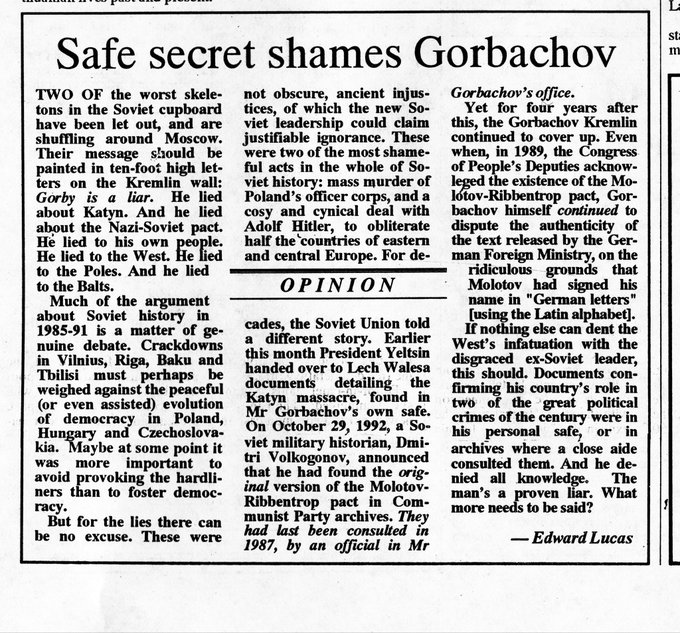
The guy was better at Pizza Hut marketing anyway.
Prior to being made redundant with the Soviet Union, Gorbechev handed over all archive documents to Yeltsin and warned of international implications if they were disclosed publicly. Regardless, the Russian Federation published the full Nazi-Soviet Pact in 1992, enabling Russian society to properly reflect on the horrors inflicted and ensure nothing like that ever happens again, so that Russia can renew itself as a modern nation state.
And we all lived happily ev..
But, wait, while waging new wars of aggression, Moscow and its supporters have suddenly remembered that the pact was actually all just a brilliant act of 4D chess. They just needed 50 years of brutal denial and suppression of the topic before remembering that.
Seriously, Molotov must be the most modest man who ever lived for never wanting credit for this great strategic move that could totally be justified.
Here's how to do that.
The idiot's guide to justifying the Nazi-Soviet Pact
Firstly, never call it an alliance!
Who can say what an alliance is anyway? Well, the dictionary can and it defines an alliance as an "agreement where two or more people, groups, or countries join forces to work together for a shared goal or mutual benefit." Ignore that.
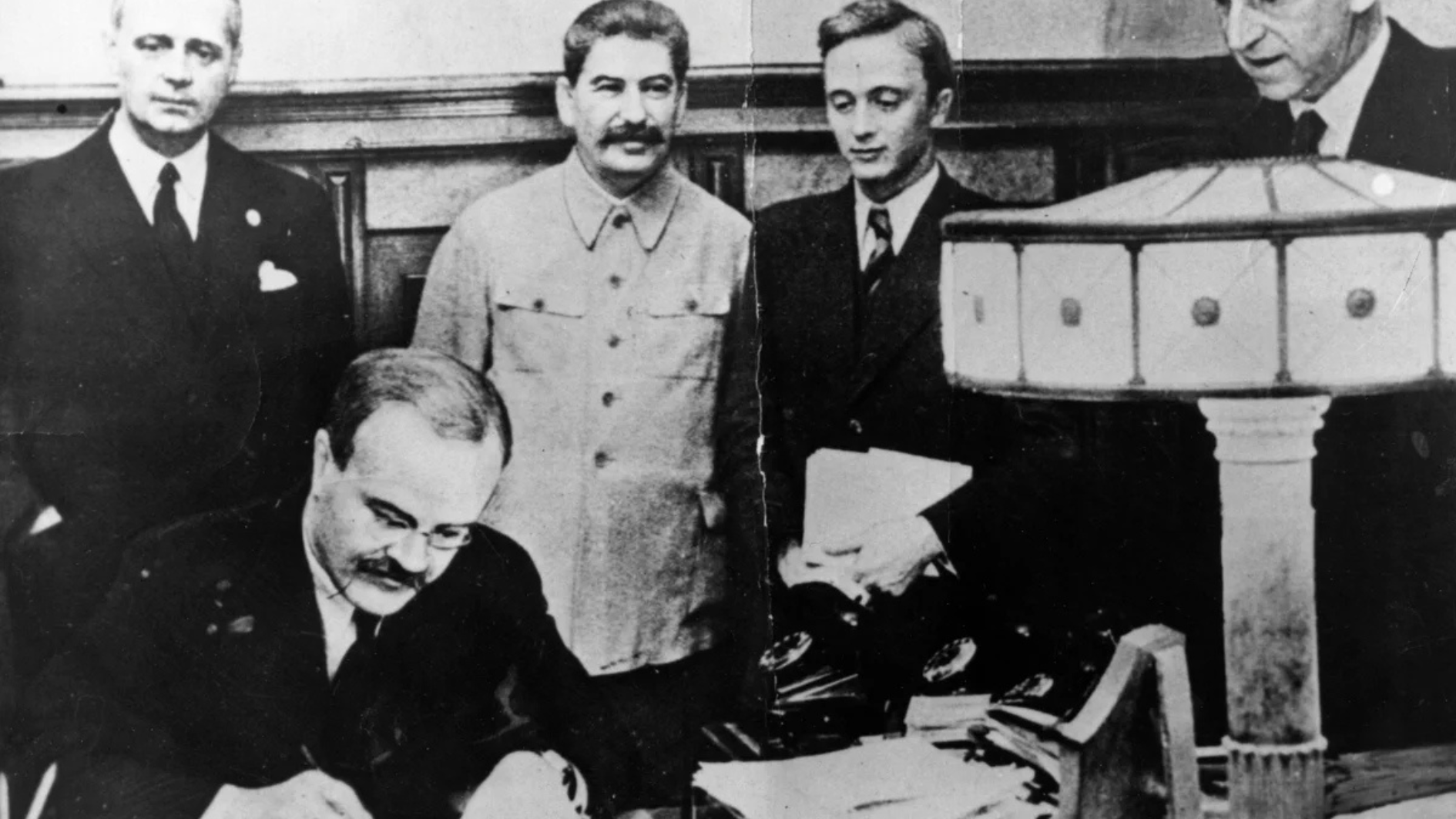
Under strictly diplomatic terms, the Soviet Union did not formally join the German Axis powers in their formal alliance. They only tried to.
In 1940, Molotov led a series of talks with Ribbentrop in Berlin on establishing a potential German-Soviet Axis with proposals presented to Hitler and Stalin. The Germans thought the Soviets were demanding too much additional territory and went quiet on their Soviet counterparts as they prepared a surprise attack instead.
So, instead of calling it a Nazi-Soviet Alliance, just insist it was a Treaty of Non-Aggression as the Nazis and Soviets insisted. Sure, that makes total sense when you are both agreeing to start the most deadly aggression in human history.
After convincing yourself of that, you can then resort to some classic Soviet whataboutism and criticise all other countries for signing non-aggression pacts with Germany.
Just ensure you refer to everyone else's pacts as being with "Nazi Germany" while only ever referring to your own pact with "Germany".
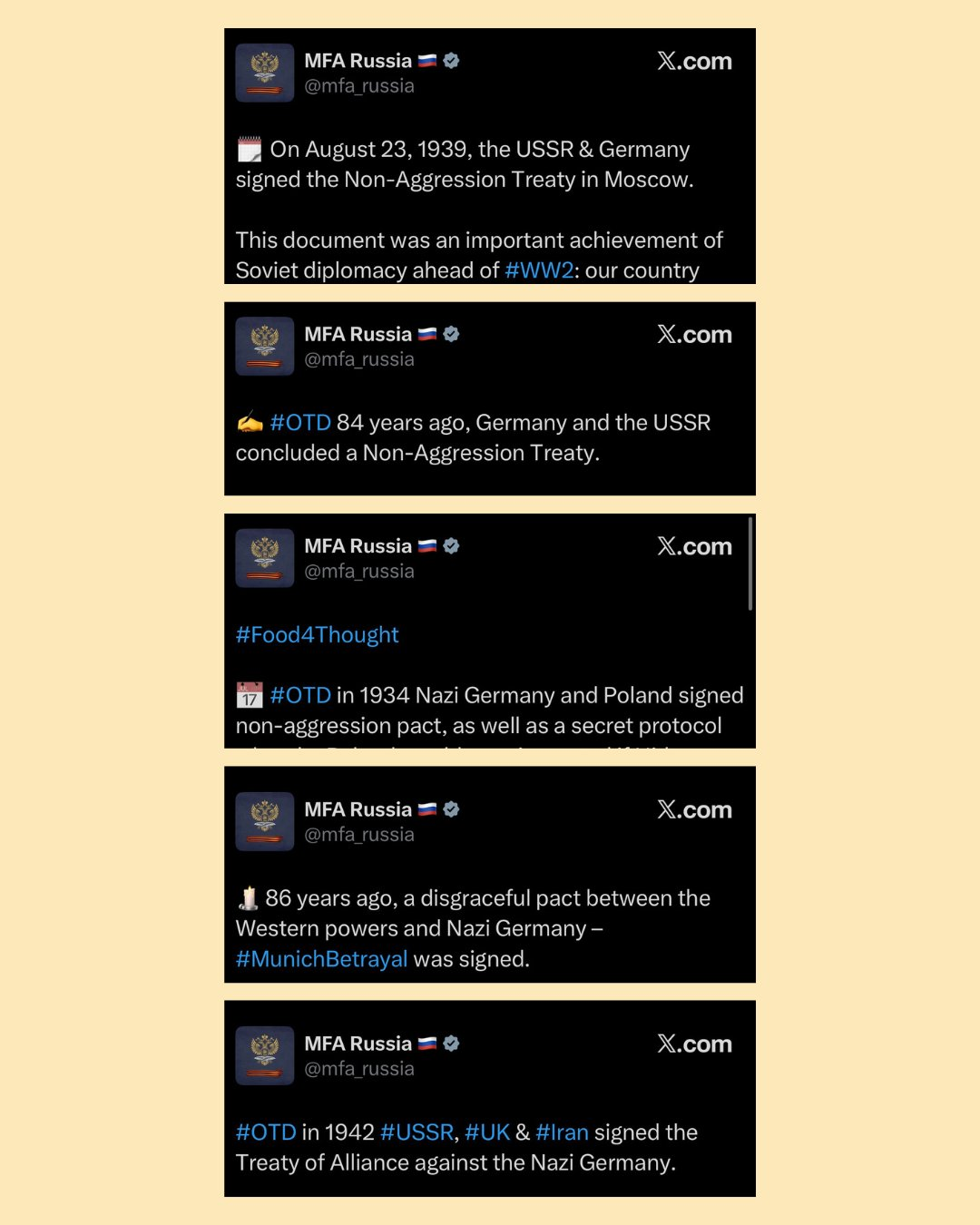
For this, you'll need to pretend as if all those countries still justify their pacts too, rather than the reality that the very notion of 'appeasement' has become a dirty word universally because the rest of the world is pretty unanimous in agreement that Nazi aggression should have been stopped sooner.
You are the only ones supporting a pact with the Nazis, somehow still in 2026, and it happens to be the one pact that substantially benefited the Nazis more than any other.
Also, none of the other countries demanded the mutual conquering of other people's countries in their pacts, which also indicates why talks previously broke down on an anti-Nazi coalition with Western democracies.
The Soviets were demanding the West provides a Soviet entitlement to move its troops into Poland and the Baltic countries, which those countries refused due to historical concerns about to be vindicated again.
Anyway, just say you had to ally with the Nazis because the West wouldn't form a coalition instead, even though you made your decision based on who would help you conquor other people's countries.
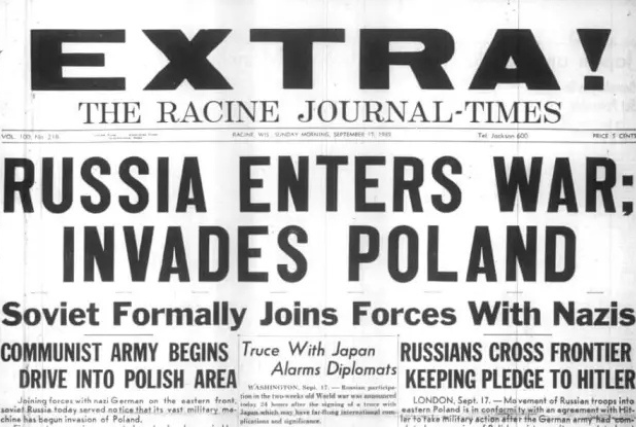
Due to the faster Nazi advance after the Pact was signed, Nazi and Soviet forces met deeper East than planned so the Nazis then pulled back West to make room for the Soviets as agreed in the secret protocol.
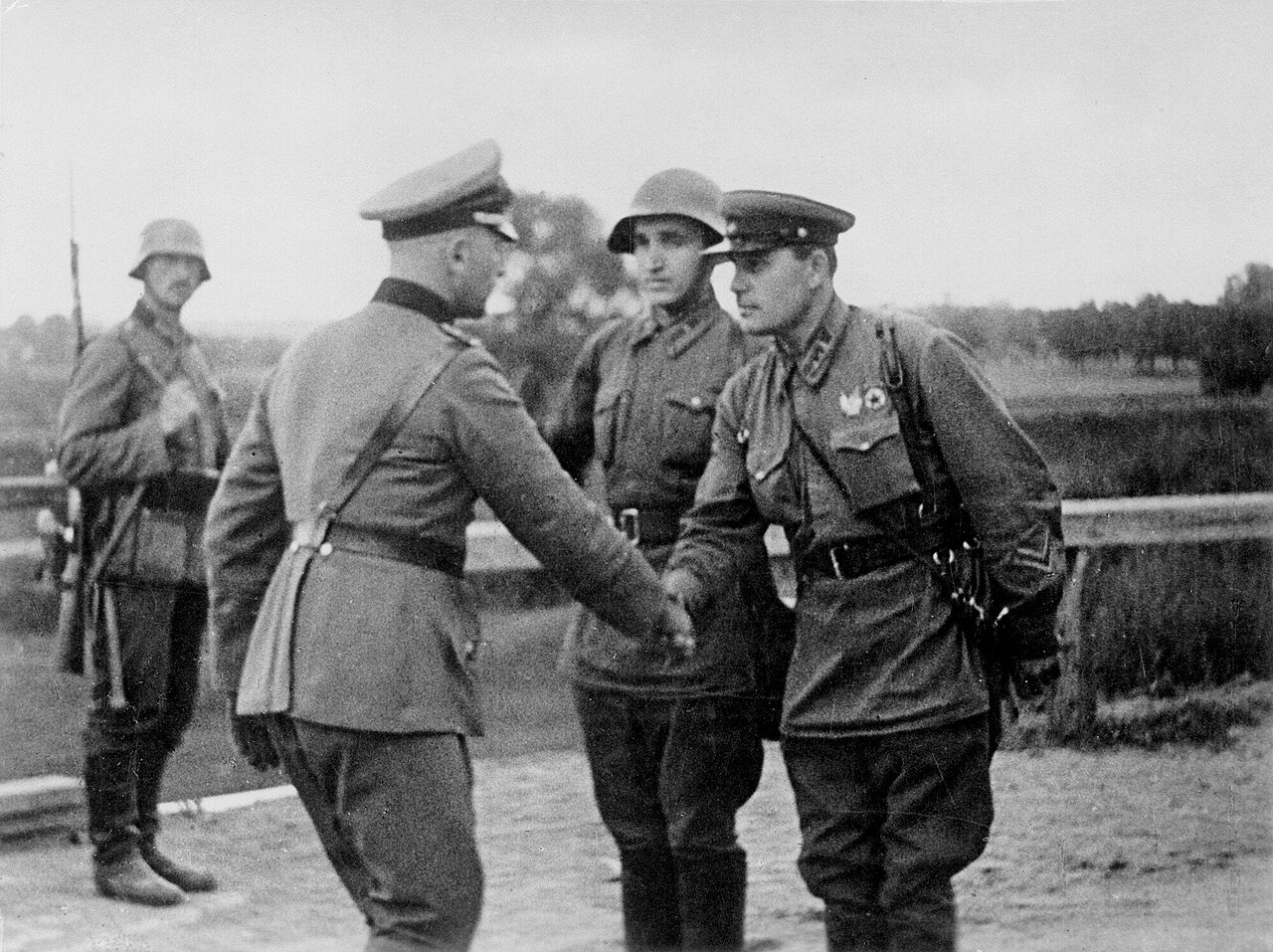
The following year, the Soviet Union violated international law again by attacking the Baltic countries as agreed with the Nazis, unleashing brutal repression while dismantling the independent states and staging annexations with no basis in international or domestic laws.
The usual tactic is to accuse all your enemies of being Nazis, although someone might point out that doesn't quite add up when you are talking about the period in which the Soviet Union was allied with the Nazis.
Before the Nazis pulled back to their secretly pre-agreed demarcation line in Poland, they celebrated together on 22 September with a joint Nazi-Soviet victory parade in Brest-Litovsk, marching together under an archway made of swastikas and red stars.
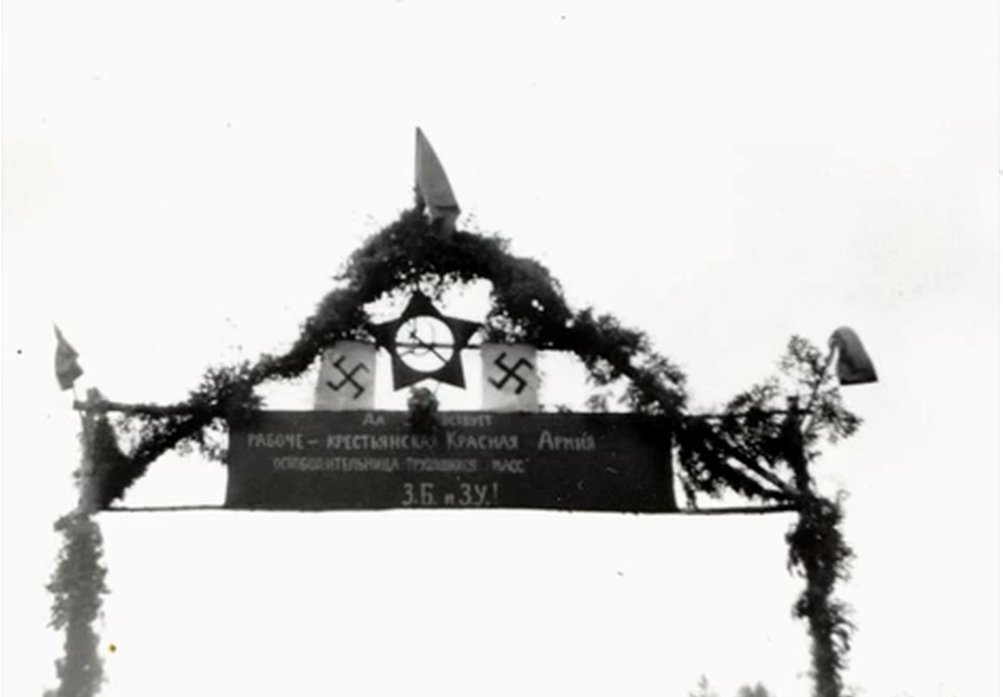
So you'll need to say that all this was part of a cunning plan to defeat the Nazis. The Soviet Union was playing the long game. 4D chess!
Because if you wanted to defeat the Nazis militarily then of course the first thing you'd do is help them expand their territory and grow stronger.
Imagine you live down the street from someone you think wants to fight you one day. Of course, it makes sense that you would prepare for that buying him a gym membership and sending him protein shakes.
But it didn't stop there. The Soviet Union must have wanted to lure the Nazis into a very deep false sense of security because it then spent nearly two years providing substantial economic, logistical, and material support to aid the Nazi war machine.
In addition, the Soviet Union began arresting critics of the Nazi regime that had fled to Russia and handing them back to their new allies, in addition to reassuring the Soviet public that both the Soviet Union and Nazi Germany were fighting the same enemy of Western democracy.
Notice that criticism or even any mention of fascism declined sharply while in this period of alliance, sorry mere non-aggression.
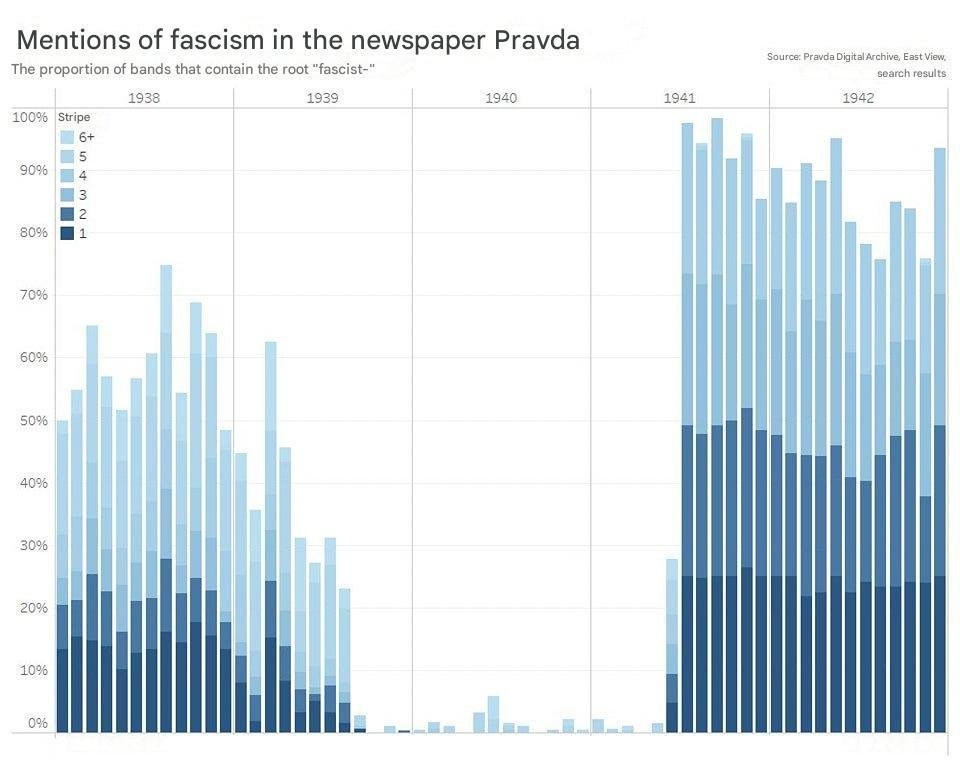
That is really playing the long game, while always ready for the Nazi surprise attack that ended the relationship.
Insist the Soviet Union always knew that Nazi Germany would turn on them, even though all historical evidence is that Stalin dismissed that idea as British propaganda, continued providing military support to Nazis until then, was angry when it happened, and his army was absolutely in no way prepared for the surprise attack.
Of course, if you are expecting a surprise invasion specifically, then it's great to have already established a 3,000 km border with your enemy.
Whatever you do, definitely don't share this photo of Stalin distraught by the news that he totally expected.
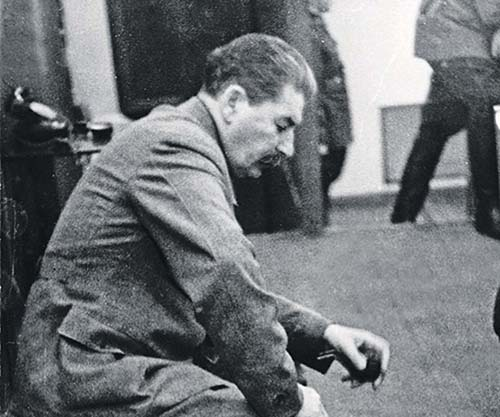
Invasions are easy to predict, of course.
Well, let's forget the fact that you almost certainly spent the lead up to Russia's full scale invasion of Ukraine insisting that there was no way that invasion would take place either and that was also all just Western propaganda.
But you can't seriously believe the Soviets were ever be on the same side as the Nazis because their ideology was completely different. However, you do also have to believe that the Soviets were on the same side as the Western democracies after that even though their ideology was completely different.
Anyway, the Soviet Union rectified the crime of having to invade and brutally repress so many countries by.. er, invading and brutally repressing them again, continuing the occupations originally agreed with the Nazis and claiming the annexations staged then as their legal basis.
Alternatively...
Frankly, all this should be quite embarrassing to anyone still willing to justify the Nazi-Soviet Pact. You should just as embarrassed as Molotov was throughout the rest of his life. The Nazis were bad, and their aggression should have been stopped sooner.
The Nazi-Soviet Pact was an attempt to drag us all back to an age of empires with all the death and destruction that comes with it. Meanwhile, it's a rules-based world of sovereign nations that unleashes peace and prosperity, and we should keep trying to build that stronger. All nations are better off when smaller nations exist too.

