
Estonia's spy chief wants Europe to find the difference between these pictures
"Hybrid shmybrid," says Kaupo Rosin, Director General of the Estonian Foreign Intelligence Service. Call it state-sponsored terrorism.
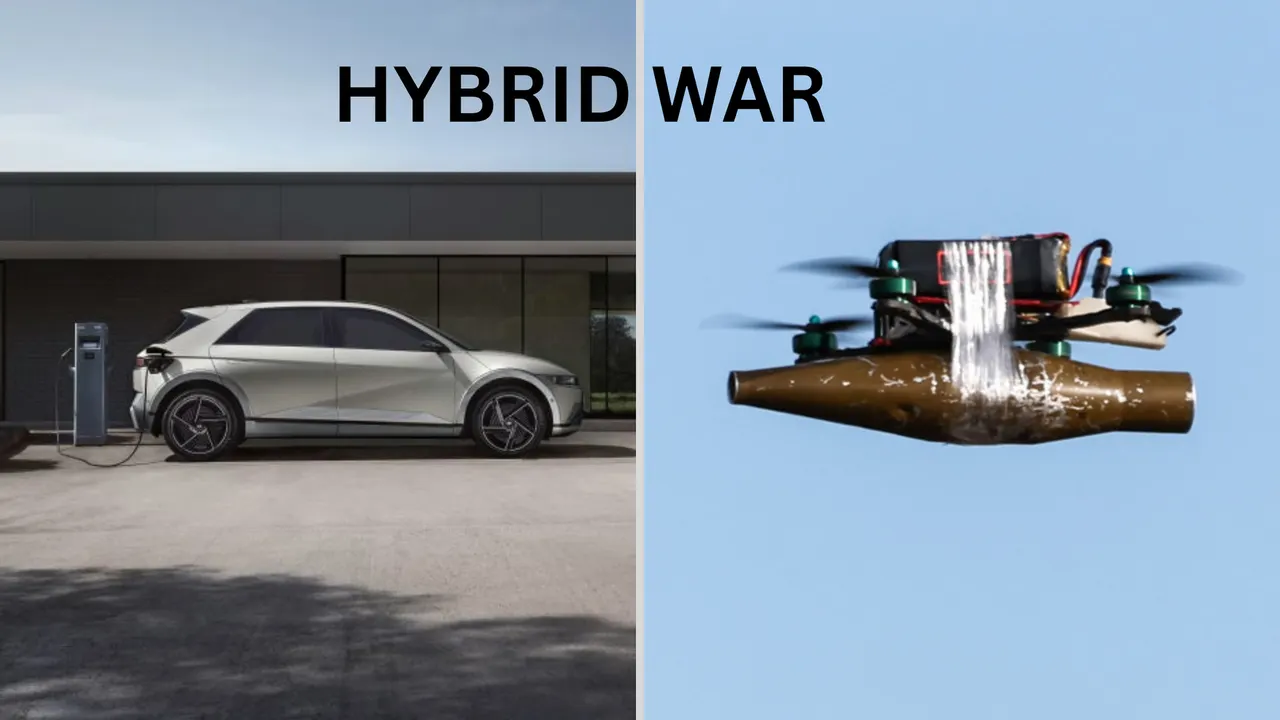
Recent incidents across Europe of sabotage and subversion are stretching the definition of "hybrid warfare" beyond breaking point. Perhaps we should now leave that adjective to electric vehicles.
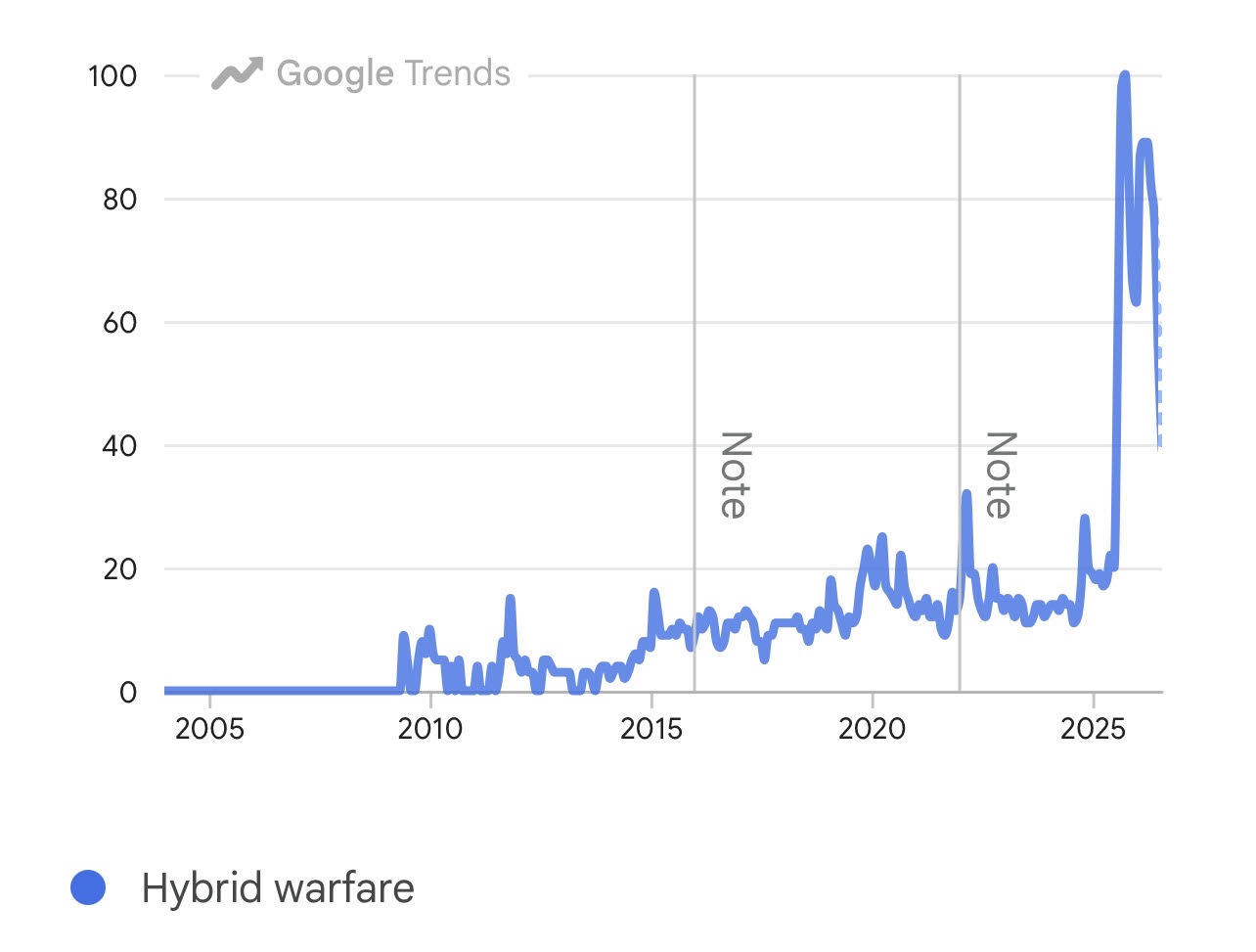
The term "hybrid warfare" was almost totally unheard prior to the 2010s, although it's only in the past year or two that it has shot up, now regularly appearing in statements of "concerned" European officials who "continue to monitor the situation".
It's usually meant to refer to some form of unclaimed or unconventional state attack combined with disinformation operations.
It's hardly a new concept though.
The Art of War, written in the 5th century BC, is basically a hybrid warfare manual about subduing your enemy through deception and disruption while avoid actual battle as a last resort. What we now call "hybrid war" is what was long considered the supreme art of war.
As one anonymous EU official suggested to Politico this week, the term is now just convenient for labelling the actions of our adversaries below the threshold of actual war and therefore not requiring too serious a response.
Convenient in the short term perhaps, but if your adversary is trying to "boil the frog" and keep getting away with more hostile actions, then normalising each one with soft language is not a good long term plan.
Today, Romania destroyed a naval drone carrying explosives near its Neptun Deep platform in the Black Sea.
— Ursula von der Leyen (@vonderleyen) August 20, 2026
An escalating campaign of threats is underway, unsettling our citizens and seeking to divide our Union.
This is hybrid warfare.
The founding mission of our Union is to…
The recent drone incursions at Germany's Leipzig airport, followed by a sea drone threat to Romania, seemed to confirm to many that we have reached peak "hybrid warfare" and it's time to officially retire the term.
Before we reach something like this:
— toomas hendrik ilves (@IlvesToomas) August 23, 2026
Entering the discussion, Estonian spy chief Kaupo Rosin has given a rare interview to the UK's Daily Telegraph in which he says that sabotage, cyber attacks, attempted assassinations, and more can all be referred to as such, and perhaps most appropriately as simply state-sponsored terrorism.
“Hybrid schmybrid," he adds.
Update: The Estonian Foreign Minister agrees.
Estonian intelligence chief Kaupo Rosin is right. Enough with the euphemisms.
— Margus Tsahkna (@Tsahkna) August 30, 2026
Putin’s campaign of sabotage and subversion across Europe is not “hybrid warfare”. It is state-sponsored terrorism. Call it what it is.https://t.co/CQFC8exWsb
The rest of the Telegraph interview
The Telegraph has done a good write-up, correctly explaining the historical context of how Estonia overcame occupation to build a world leading spy agency.
They quote Rosin's British counterpart at MI6 saying that, “pound for pound”, Estonian spies can “probably knock us into a cocked hat”. (It apparently means they are very good).
On reports that the CIA Chief visited Moscow to warn against an attack on NATO, Rosin says: “I think that’s a bit exaggerated and there were other topics discussed.”
More interesting is his analysis on what's happening inside Russia.
“What we see is that in Russian society, by now, everybody ‘knows’ that the mobilisation will come," explains Rosin. "There is a lot of talk about it in Russia. Everybody knows somebody who works in the military who has said that mobilisation will come.”
“I do not see a street revolution happening at this point. More important is what people who have access to money, weapons and information – what do they think? In these circles, there is no more talk about total victory. People are discussing different scenarios, and mainly how to end this [war] in a proper way.”
While some may see the headline about a possible revolution in Russia as wishful thinking for the West, it is merely the reality that Russia's system is at a point of high stress right now and vulnerable to sudden collapse at times like these, which we can acknowledge even without making any judgement about what comes next.
He points to the Prigozhin mutiny as a sign of how hollow and surprisingly weak the system might be on the inside.
“I would say, if something changes in Russia, then it will happen in a very rapid manner and we will all be surprised. It will be an overnight thing, if it ever happens.”


