Seymour Hersh is still ‘a poor waif in his underwear’
This curious phrase was first used in a totally real conversation between Hersh and an anonymous US official.
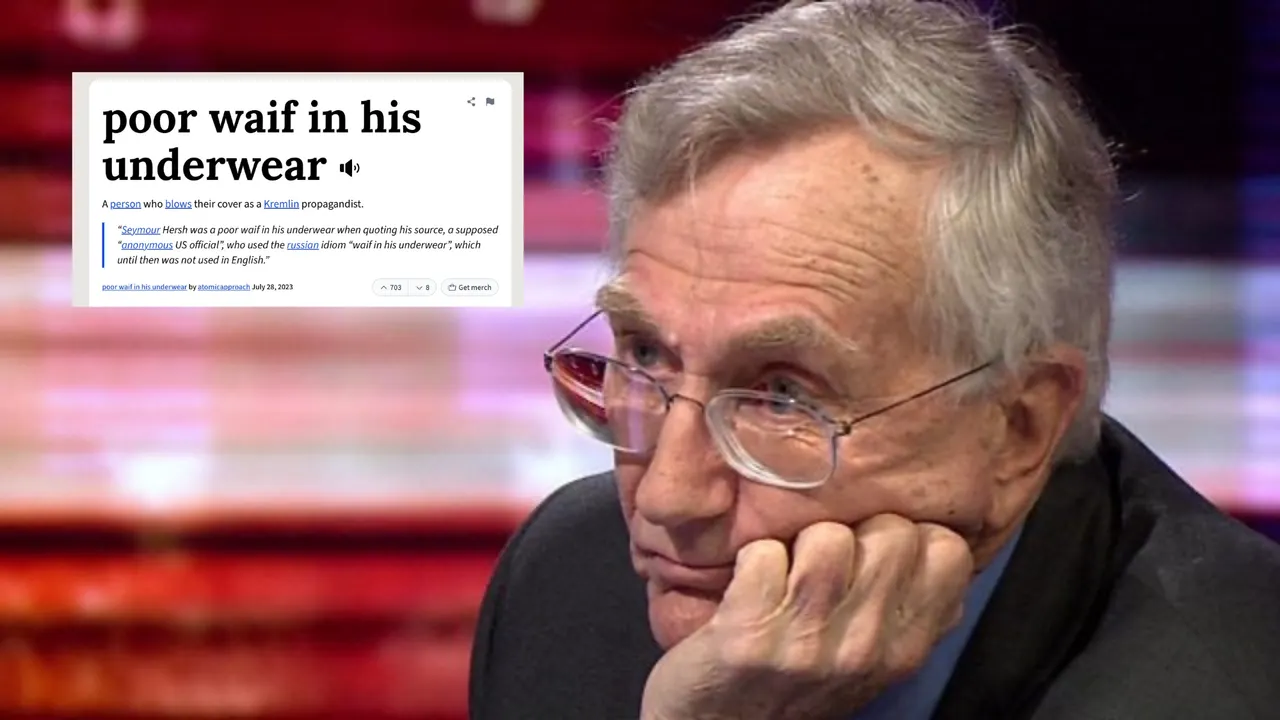
You know that English expression ‘a poor waif in his underwear’?
No? You mean it’s not the kind of common expression that two English speakers would use in a conversation?
Then that raises some interesting questions.
Rewind.
It was exactly three years ago that Seymour Hersh, the famed former journalist turned Assadist atrocity denier, first introduced the world to this bizarre arrangement of words.
If Hersh is to be believed, it was a phrase used by a totally real high ranking US official speaking to him on condition of anonymity.
“Zelensky has no plan, except to hang on,” Hersh quotes him as saying. “It’s as if he’s an orphan—a poor waif in his underwear—and we have no real idea of what Zelensky and his crowd are thinking.”
No other English speaker had ever before used the phrase ‘poor waif in his underwear’. No English speaker could be expected to make any sense of it.
So why did this supposedly American official choose those words in a supposed conversation with a fellow English speaker?
‘Waif’ in particular is an extremely uncommon English word, not in most people’s vocabulary. It is very occasionally used as ‘skinny waif’ to describe someone as very slim. But this official somehow reached for the even more obscure, archaic definition of waif as an abandoned child. It’s literally Dickensian, which doesn’t fit with an American official in our era who proceeds to rant in a distinctly unDickensian way about Ukraine being “the dumbest and most corrupt country in the world, outside of Nigeria”. Added to all that oddness is the fact that he’s using the word in a totally nonsensical phrase.
Even without knowing the context, there is only one plausible explanation. It’s an auto translate error.
Before the advent of AI, auto translate did have a tendency to choose obscure word translations without knowing what would sound natural to a native speaker, especially if using a less advanced local translation software.
And there is one especially plausible candidate for the source language, again without even knowing the context.
‘Poor waif in his underwear’ appears to be an auto translation of мальчик в трусиках. It’s Russian.
Now, the context.
Hersh had been churning out a series of blog articles based on his anonymous sources that are consistently aligned with Russia’s talking points.
Based on Hersh's past credibility as a reporter, his articles are still quite widely disseminated as if credible by a large proportion of “Russia expert” journalists and commentators, as well as being promoted by pro-Russian media, referenced extensively by both Russian and Chinese officials, and generating mainstream media coverage across the world.
His most widely read blog article to date remains his highly detailed yet error-riddled and now thoroughly contradicted account of how the US was supposedly responsible for blowing up the Nord Stream pipeline in the Baltic Sea, again based on his high level anonymous sources.
All those “Russia experts” amplifying Hersh would have to believe that “a poor waif in his underwear” is totally a phrase that a US official would choose to invent during a conversation with Hersh. If they want to humiliate themselves by pretending to believe that then we should at least get that on record.
This is something they’ve all been keen to avoid.
In three years, neither Hersh himself nor a single person who has amplified his reporting has ever offered a plausible alternative explanation for how the phrase made it into his article, leaving the only obvious answer.
”Warm water port“
These days, AI enables propagandists posing as other nationalities to avoid such embarrassing mistakes by offering up more natural sounding language that can closely mimic native speakers.
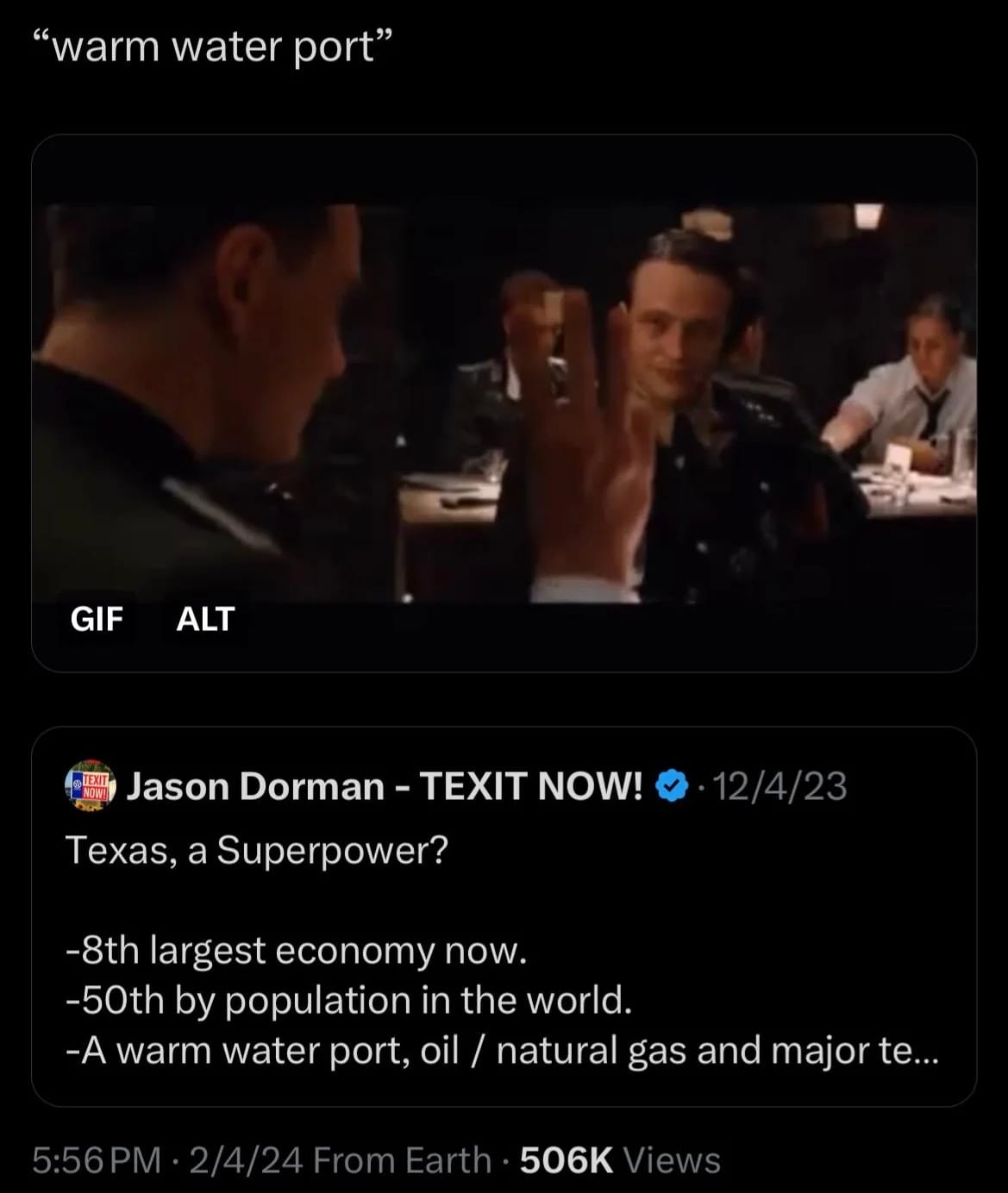
Before then, these kind of mistakes weren’t uncommon, either as an autotranslate error or simply a failure of cultural references. One that became a meme, for example, was “warm water port”.
A Twitter user posing as a proud Texan arguing for Texan independence, which he called "Texit", once listed the state’s "warm water port" - as no one in Texas has ever described it - among reasons Texit would be a success.
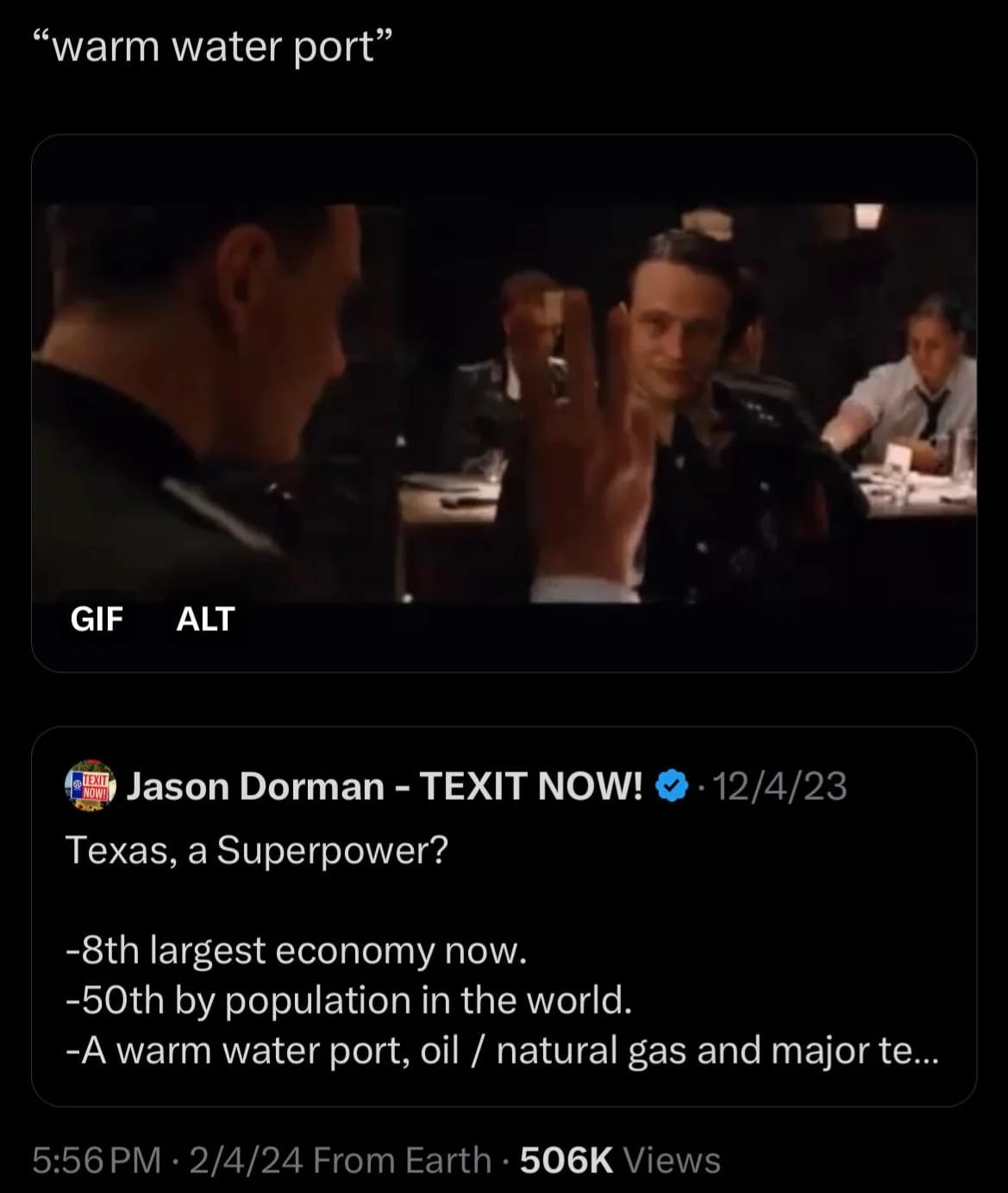
“Warm water port” is not a flex typically used in the US. Certainly not in Texas.
Or pretty much anywhere except Russia where access to warm water ports has long been a historical and continuing (invalid) concern, fuelling imperial expansion, including in its ongoing war of aggression against Ukraine.
It’s also worth noting that “Texit” is a distinctly European political reference.
Then there’s Musk’s mistake, using the term “Krushchev’s mistake” when arguing that Ukraine’s Crimea should be recognised. That term had only ever been used in Russian propaganda, suggesting where the idea might have been fed from, knowingly or not.
An English definition is born
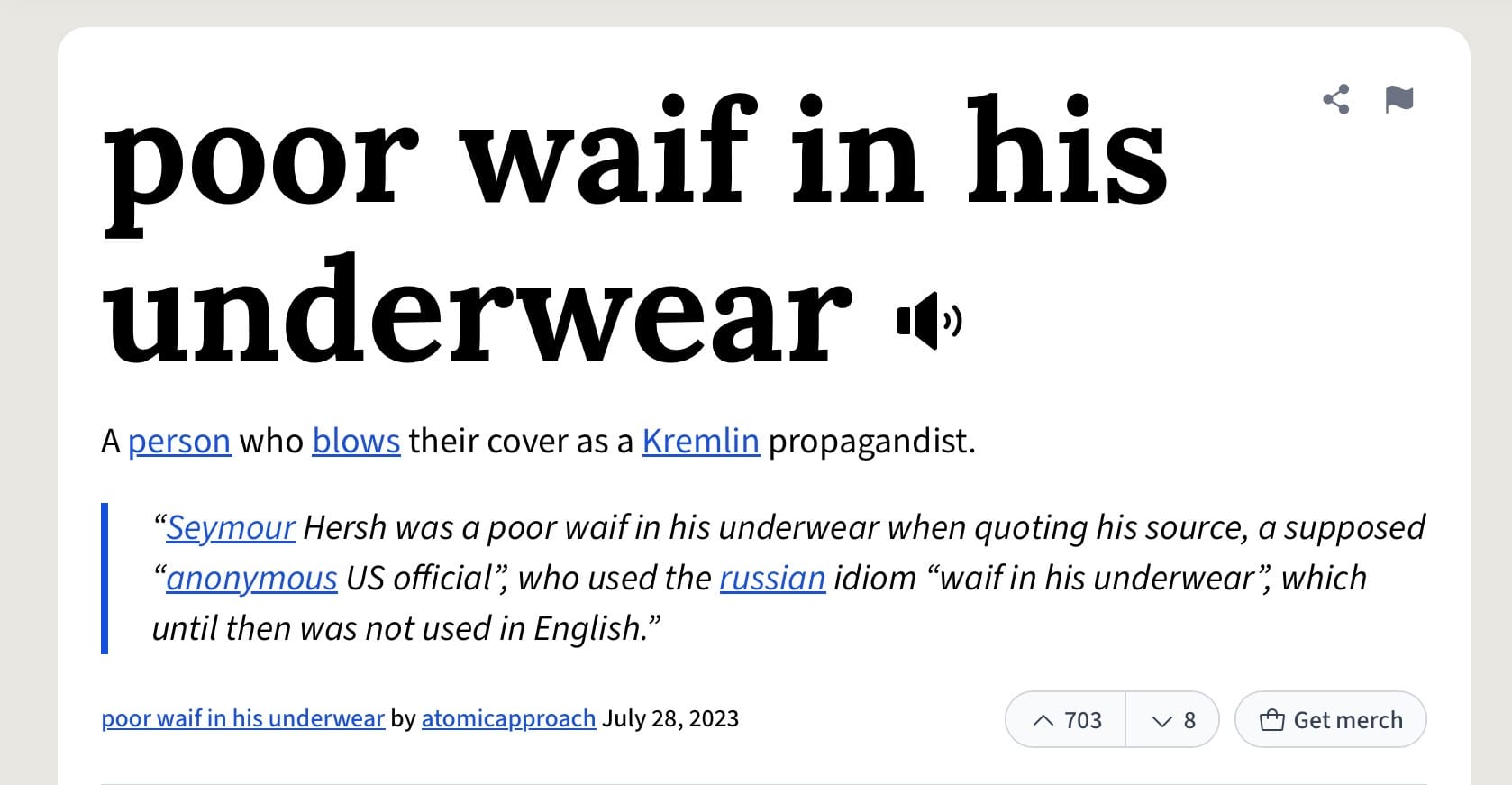
Thanks to Hersh, that expression ‘a poor waif in his underwear’ has finally found a usage in English as now explained by Urban Dictionary, although it’s not quite the definition he may have hoped.