Straight-talking constitutional scholar Ülle Madise is Estonia's next President
The future of Ukraine must not be negotiated over the heads of Ukrainians, says President-Elect Madise.
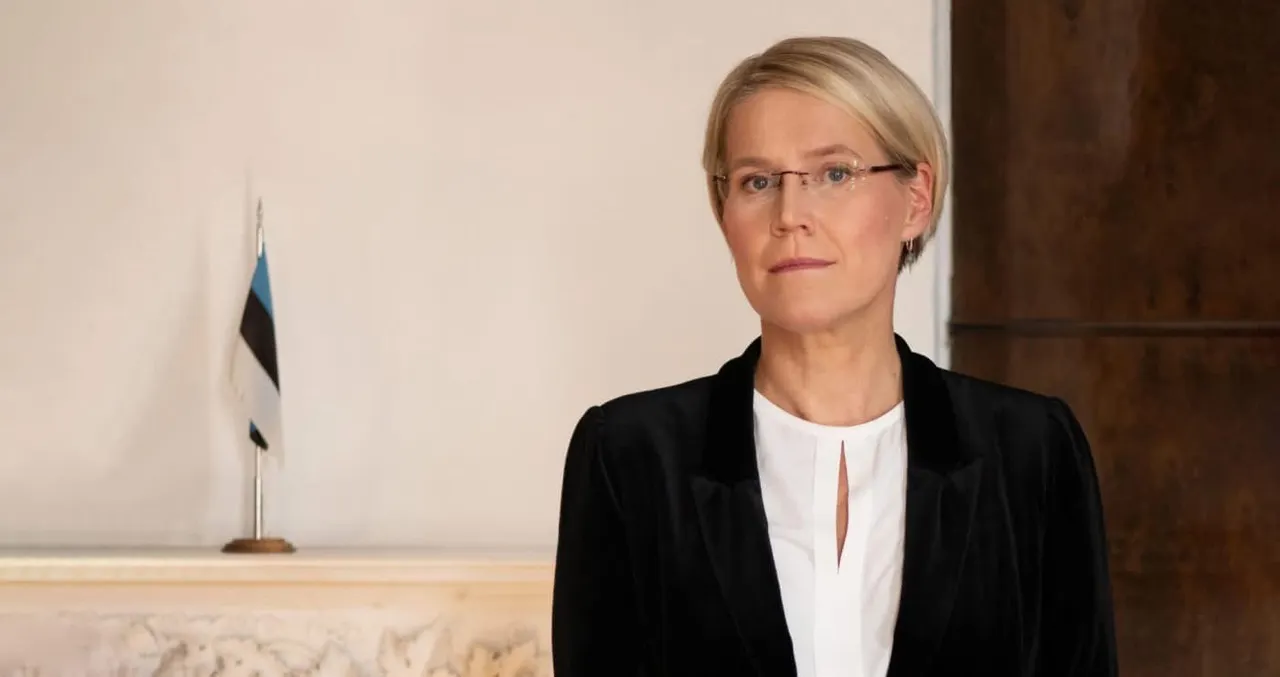
The Estonian Parliament has chosen Ülle Madise to be the country's next President, swiftly wrapping up the process in a single, decisive round of voting.
Madise is a leading constitutional expert who has been serving for more than a decade as Estonia's Chancellor of Justice and Human Rights Ombudsman. She's outspoken about the need for clear communications, and is an especially strong advocate for promoting and protecting the Estonian language.
Just before her election, Madise gave a speech that focused on trusting each other in society, overcoming animosity in politics, and builder a freer, happier and stronger country, as reported by our friends Estonian World,
Perhaps of most interest to international readers, Madise strongly supports Estonia's future as an integral part of both the EU and NATO, and says Estonia continues to stand with Ukraine. Any peace settlement, she says, must be just for Ukrainians, not reward aggression, and must not be negotiated over Ukraine’s head.
The next President of Estonia is Ülle Madise, a constitutional lawyer, long time Human Rights ombudsman and marathon runner. Excellent choice! pic.twitter.com/fQTccrqYov
— Eerik N Kross 🇪🇪🇺🇦🇮🇱🇪🇺 (@EerikNKross) September 2, 2026
Kristjan Pihl has written a great profile of Madise at ERR English, looking at her values, sense of humour, and bold nature - even in rebuking the very Parliament that has now elected her.
As a non-partisan candidate, Madise can't really be pinned down on ideology, and her views often sound like a blend of classical liberalism and conservativism. Like most people outside of politics, perhaps. She has, at times, sounded quite libertarian even, criticising bureaucracy and state overreach, and emphasising that people know better than the state how to live their own lives and run their own businesses.
In one incident revealing her aversion to political performance, eyebrows were raised when Madise appeared on camera during the pandemic without a mask. She explained that it would have been hypocritical of her to put on a mask just for cameras when she had been having a meeting without one because attendees were healthy and all other protocols were being followed.
More relevant than her specific politics then is what the MPs saw in her values and competence for the role.
To better understand that and what to expect from her Presidency, it's worth understanding the system that chose her.
According to the Estonian constitution, the state exists to protect the Estonian language, people and culture, and the President has a key role in safeguarding that.
It's a role that often comes with the words 'largely ceremonial' in media reporting around new Presidents, but the truth is a bit more interesting. While the Prime Minister has clear executive authority, the Estonian President has a key balancing role with reserve power to make appointments and veto legislation, in addition to being the primary representative of the nation abroad, and championing Estonian language and culture. In a small country, this really matters.
Now, rather than subject the role of Head of State to knife-edge swings across the political spectrum every four or five years, Estonia has a somewhat unique indirect Presidential system designed to favour a non-partisan candidate through overwhelming consensus.
Ok, bear with us.
Estonia's Parliament, the Riigikogu, gets the first attempts to elect the President but they need to give more than two-thirds of their votes to one candidate in a secret ballot. They try that three times. If they fail, a new electoral college is formed to include all locally elected representatives across Estonia, who can pick one of those candidates based on a simple majority. They get two attempts. If they also fail then it's back to the Rigikogu to try again. At that point though, it's become customary for all candidates to drop out so that the whole process can be reset with new candidates.
Now bear in mind that Estonia has a very multi-party political system. The winning party usually only gets around a quarter to a third of Parliamentary seats. No one ever comes close to a majority, let alone the two thirds needed for choosing the President.
This means the parties need to properly talk to each other and agree who can be President based on something other than strict party interests. They should find someone who has broad appeal to represent the nation and objectively serve as a competent Head of State.
And so they usually opt for someone outside the political party system. Historians and scientists make good candidates. And it may be someone who has kept a relatively low public profile, despite their achievements, and is not even particularly enthusiastic about being drafted into the nation's top job, which some would say is the best qualifier for power.
This, for example, is how current President Alar Karis reacted to his own election win.
If you want to understand the Estonian temperament, remember this is considered a normal reaction to hearing you’ve just been elected President of the Republic. pic.twitter.com/lPaOT1I3Cw
— Bad Baltic (@BadBalticTakes) September 2, 2022
The need to get an overwhelming majority means that the MPs will often cut straight to the chase and start the electoral process with their single pre-negotiated consensus candidate, which can seem a bit bizarre to outsiders, especially as that one candidate may not even win.
So this sometimes gets criticised in the Western media with comparisons to Soviet elections, and always gets criticised in the Russian media, which suddenly becomes an advocate of free and fair elections - all of which is ridiculous to anyone who understands the role of the President in Estonia.
Bear in mind that Estonians have a very free and vibrant Parliamentary democracy, and are among just 6% of people in the world who live in a full democracy, according to the Economist Democracy Index.
One irony of Estonia's system is that you can become more popular while President and then fail to get re-elected as a result because the system rewards broad acceptance, not a louder base of support.
There are some in Estonia who want to change the system to direct Presidential elections. Either system is legitimate. But many say it is still preferable to have a President elected through consensus from that same Parliamentary system as a national unifier. They would argue that it has consistently produced good results.
And so Estonia tends to opt for deep thinking academic and public service types who have demonstrated a commitment to upholding Estonian culture and values. That started post-occupation with Lennart Meri, a writer and film maker focused on documenting the Finno-Ugric family of nations to which Estonians belong. Current President Karis is a scientist and was Director of the National Museum of Estonia when he was drafted into office as President.
As a constitutional scholar, few people understand all this better than Madise herself.
She's familiar with the President's office.
Madise studied law at the University of Tartu, which also happens to be her home town, the so-called 'City of Good Thoughts'.
She spent most of her career in the Justice Ministry, as well as teaching constitutional law at the University of Tartu and Tallinn University of Technology.
Notably, Madise was chosen by President Toomas Hendrik Ilves to be his legal advisor and has long spoken warmly of her as a great future President. Like her former boss, Madise is tech-savvy too, having helped establish the legal foundations of Estonia’s internet voting system.
Madise was initially reluctant to accept her name being put forward as President until it became clear that her nomination had broad cross-party support.
You can read here her full speech that she made just before her election.
"Estonia must be the best place in which to live, raise children and grow old; to invent and write poetry; to conduct research and do business," she said. "Free, vibrant, happy, exciting, alive and evolving. Everyone must be able to feel that they themselves – and their life, work and creativity – matter."
"Through cooperation, most problems can be solved and needless resentment reduced," said Madise. "Yes, Estonia stands on the front line of security for all Europe and the entire free West. But that line holds because our predecessors had the wisdom to restore independence, race to catch up with the free world and build a safe country free from corruption. They had the vision and ingenuity to steer Estonia into the European Union and NATO – not merely to coast along inside them, but to help build a common future."
Now it would be fun to think who would be chosen as President in other countries if they had the same system and had to opt for a national unifying candidate with cross-party backing. Perhaps the Americans would opt for Arnold Schwarzenegger or the Brits would draft in President David Attenbough.


