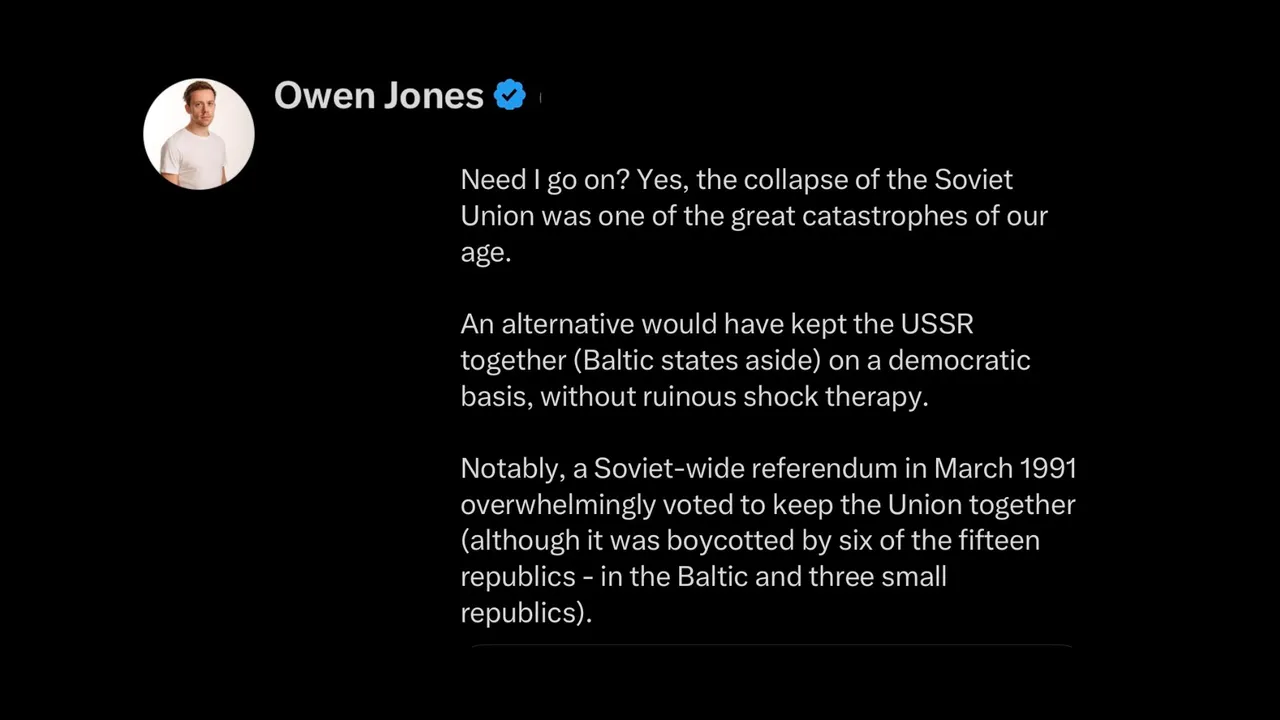
It was a tweet by British columnist and author Owen Jones many years ago that first inspired the creation of Bad Baltic Takes.
He’d argued then that Eastern Europe should have been made into a “buffer zone” between the West and Russia after the end of the Cold War, which apparently would have solved so many problems today.
But sacrificing the sovereignty of other people’s nations for your own security actually gets you neither.
And now it’s another tweet by Owen that inspired the restart of Bad Baltic Takes (and this new blog for it).
After a long ramble about why the collapse of the Soviet Union was supposedly one of the great catastrophes of our age, he argued:
“An alternative would have kept the USSR together (Baltic states aside) on a democratic basis, without ruinous shock therapy.
Notably, a Soviet-wide referendum in March 1991 overwhelmingly voted to keep the Union together (although it was boycotted by six of the fifteen republics – in the Baltic and three small republics).”
“Baltic states aside”, you say Owen?
Ok, let’s talk about that.
So why didn’t the Soviet Union itself just put the Baltic states aside?
There were, in fact, a lot of influential voices in the late 80s, both in Russia and the West, who argued for this Baltic exception - not necessarily out of compassion for the Baltics under brutal occupation - but because they reasoned this was the best way to save the Soviet Union.
They argued the Soviet Union should treat the Baltics as a special case, provide some kind of exceptional autonomy status (how generous!), and therefore contain the momentum toward independence from spreading beyond the Baltics.
Moscow rejected that idea. It understood that acknowledging why the Baltics were a special case was fatal to the entire myth of the Soviet Union.
In an attempt to placate the Baltic countries in the run up to the Baltic Chain protest - which was marking the 50th anniversary of the Molotov-Ribbentrop Pact that directly led to their occupation - Moscow did reluctantly officially admit to illegal collusion with Nazi Germany over the pact, but then also maintained the absurd line that this didn’t alter the legal status of the Baltics as part of the Soviet Union.
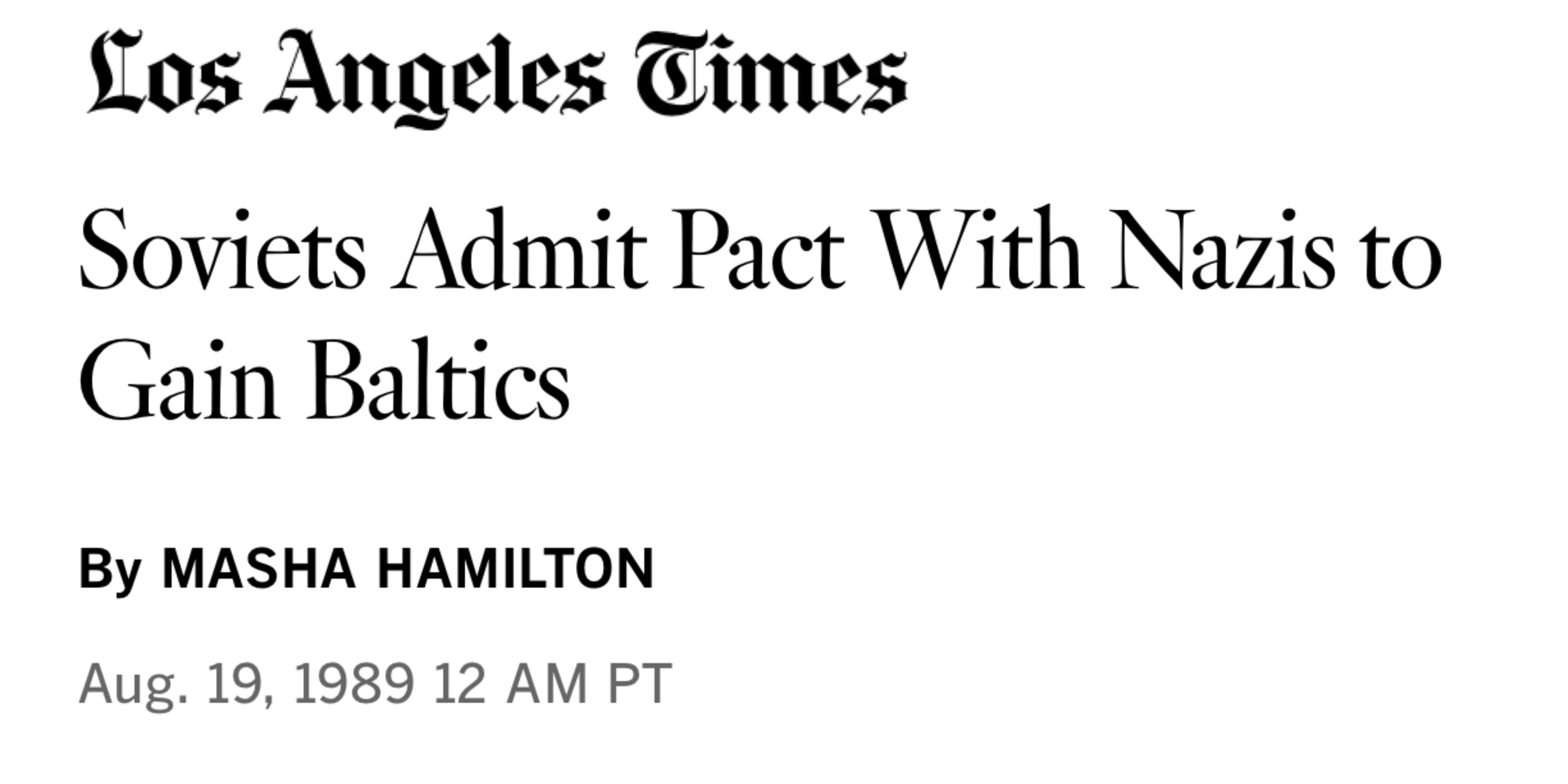
As reported on 19 August 1991, such as this from the LA Times:
Reversing decades of Kremlin denials, a senior Politburo member Friday conceded for the first time that Nazi Germany and the Soviet Union under dictator Josef Stalin signed a secret pact on the eve of World War II that cleared the way for the Soviet annexation of the Baltic states.
But Alexander N. Yakovlev, while arguing that the secret protocol to the 1939 nonaggression accord should be "unequivocally condemned," denied that it had any legal impact on the Baltic states' current status as members of the Soviet federation.
The timing of Yakovlev's admission, only days before demonstrations are planned to mark the 50th anniversary of the signing of the protocol, appeared to be a calculated risk on Moscow's part.
They were all kinda right about the Baltic exception impact
Treating the Baltics as a special case or not treating the Baltics as a special case both would have helped enable the whole Soviet empire to unravel.
There was simply no magical good option to save the collapsing system because it was fundamentally just a shit system that people forced to live under hated (or at least had long lost enthusiasm for).
The magical thinking is just more imperial entitlement.
A more democratic Soviet Union wouldn’t simply shut up the disillusioned masses. It would have meant more opportunities to discuss the horrors of how the Soviet Union was formed and held together, and more opportunities to discuss the potential of nations held back by that.
And about that referendum
Owen refers to the widely rejected Soviet referendum in which apparently most people wanted to save the Soviet Union.
He doesn’t mention the most hilarious part of that referendum, which is that BOTH answers were designed to mean you must love the Soviet Union.
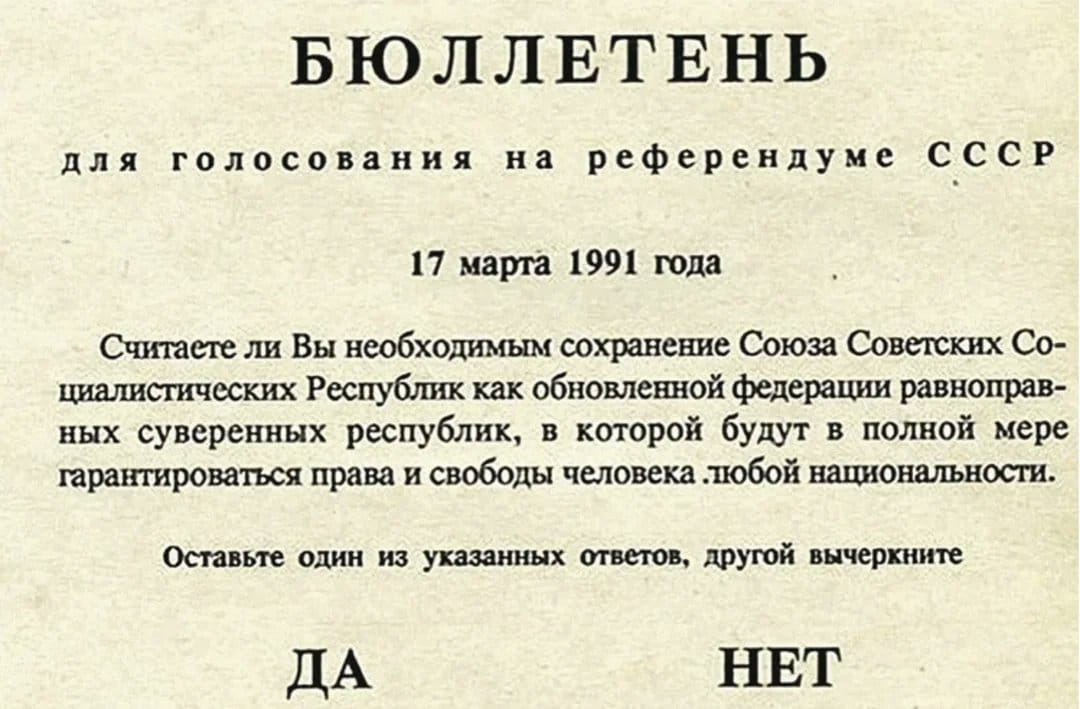
It was deliberately worded badly: “Yes, I consider it necessary to keep the USSR as a reformed entity” or “No, I consider it necessary to keep the USSR as it is right now”.
The yes vote that Owen describes as people wanting to save the Soviet Union was the vote in favour of reforms and therefore actually the closest option offered for rejecting the system.
Plenty of Russians did want to save the Soviet Union, but recognising that specific referendum as meaningful reveals a lack of seriousness on this subject.
The referendum question was altered in some places, adding extra confusion to the process but also a clearer indication of what people actually wanted, most notably in Ukraine where an additional reference to sovereignty meant it passed overwhelmingly.
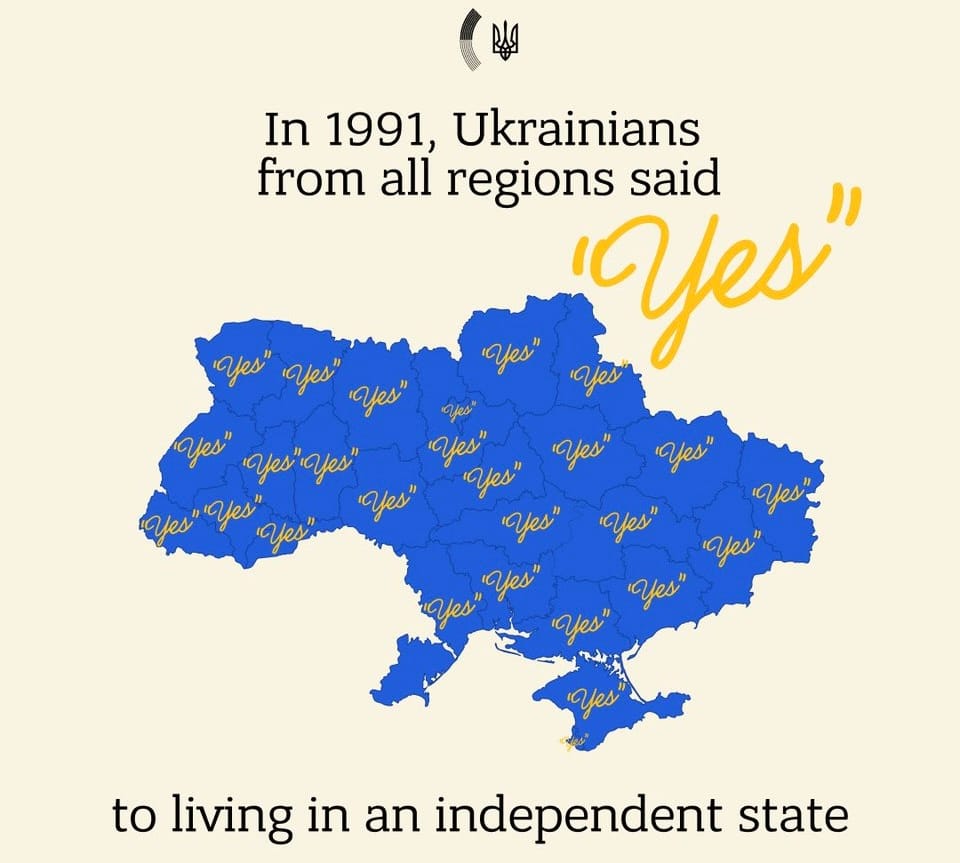
More useful to know is that Ukrainians later that same year held a clear unambiguous referendum on full independence and that passed with 92.26% in favour nationally and majority support in every Ukrainian region.
It’s seriously odd then that someone who usually loves people power would seek to undermine some of history’s most powerful mass protests happening at the time he mentions against that tyranny.
Even Russians were out protesting in numbers not seen before or since.
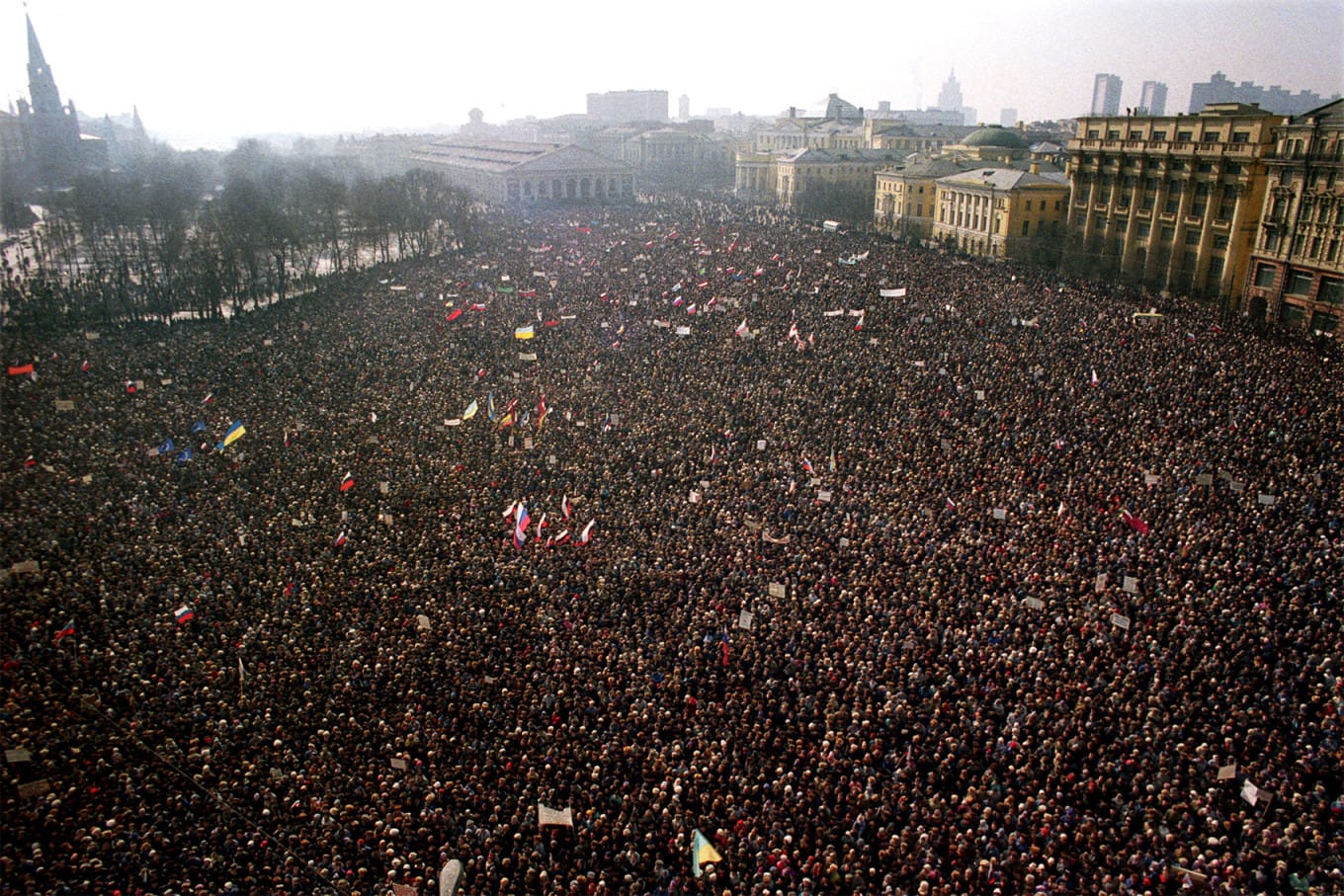
Born to another time and place, if having to experience the Soviet Union himself, commentators like Owen would hopefully be out on the barricades too, not tweeting nonsense years later from the comfort of their armchair to undermine that legacy.

